Athens Has a Mountain, and Most Tourists Never Bother
Mount Hymettus hiking is one of those experiences that separates people who actually explore Athens from those who spend four days ricocheting between the Acropolis and overpriced tavernas in Monastiraki. The mountain sits right on the city’s eastern edge — you can see it from almost anywhere in central Athens — and yet the trails are rarely crowded, especially on weekday mornings. That’s genuinely unusual for a capital city with millions of visitors a year.
Hymettus tops out at 1,026 metres. It’s not a brutal alpine slog, but it’s not a Sunday stroll either. The terrain is rocky limestone, the scrub smells intensely of wild thyme (this mountain was famous for its honey in antiquity, and that reputation is entirely deserved), and the views over Athens from the upper ridgeline are the kind that stop you mid-stride.
Getting There from Central Athens
The most practical starting point is Kaisariani, a quiet residential neighbourhood about 6km east of Syntagma Square. Bus 224 runs from Akadimias Street and drops you near the Kaisariani Monastery trailhead — budget around 40 minutes and €1.80 for the ticket. Taxis from central Athens cost €10-14 depending on traffic. If you’re driving, there’s free parking near the monastery.
The Kaisariani Monastery itself is worth 20 minutes of your time before you start climbing. Entry is €4, it dates to the 11th century, and the frescoes inside are remarkably well-preserved. The spring nearby supposedly has water with fertility-enhancing properties — ancient Athenians believed it, and local women apparently still visit.
The Main Trails
The Kaisariani Ridge Trail (Intermediate, 3-4 hours)
This is the route most hikers take, and it earns its reputation. Starting from the monastery car park, follow the red waymarks uphill through pine forest — the shade is genuinely welcome in summer, when Athens below is sweltering. After about 45 minutes the trees thin out and you hit open limestone scrub. From here to the ridge it’s another hour of steady climbing.
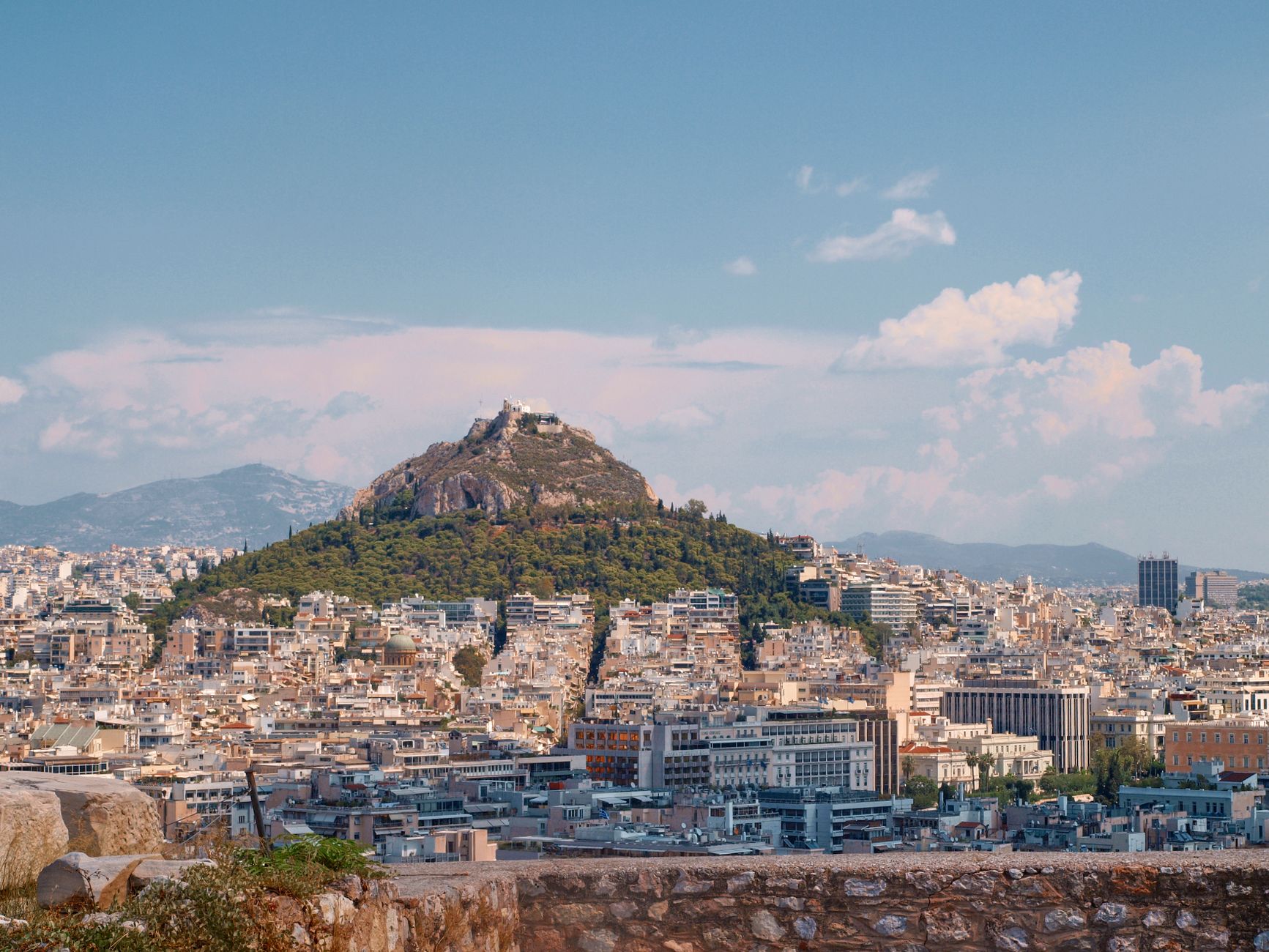
The top of the ridge at around 900 metres gives you the view that makes the effort worthwhile. Athens spreads out below you in every direction — the Acropolis is visible, Piraeus and the Saronic Gulf beyond it, and on clear days (best in winter and early spring) you can see all the way to the Peloponnese. The air smells like thyme and clean stone. It’s a genuinely good moment.
Total distance is roughly 12km return. Bring at least 1.5 litres of water per person — there are no facilities on the mountain beyond the monastery.
The Ano Ilisia Short Loop (Easy-Moderate, 1.5-2 hours)
If you want a faster taste of Hymettus without committing to a full half-day, the short loop starting from the Ano Ilisia neighbourhood (accessible via tram to Ilisia stop, then a 10-minute walk) gives you solid views for relatively modest effort. The trail gains about 300 metres of elevation and loops back on itself. Good for families with older kids or people who want the views without destroyed knees.
The Summit Route via Koutouki (Challenging, 5-6 hours)
Experienced hikers can push for the actual summit at 1,026 metres, typically approached via the village of Koutouki on the mountain’s southern side. You’ll need your own transport to reach the trailhead. The route passes the Koutouki Cave (worth a separate visit — entry around €8, proper stalactites, genuinely impressive) and involves some scrambling near the top. Do this one in spring or autumn. Summer heat on exposed limestone at altitude is brutal and dehydration risk is real.
Practical Things Nobody Tells You
- Start early. On the ridge trail, aim to begin by 7:30am in summer. By 11am it’s unpleasantly hot above the treeline and the haze ruins the views anyway.
- The trails aren’t perfectly marked. Download the route on Maps.me or Wikiloc before you go. The red waymarks fade in places and junctions aren’t always obvious.
- Wildlife. Hymettus has tortoises wandering the lower trails, hawks overhead, and the occasional snake sunbathing on rocks. The snakes are non-venomous but check where you put your hands when scrambling.
- After the hike. Kaisariani neighbourhood has excellent neighbourhood tavernas. Klimataria on Praxitelous Street does a lamb chop and village salad combo for around €14 that tastes like a reward.
- Guided options. If you’d rather have navigation handled, GetYourGuide lists small-group Hymettus hiking tours departing from Athens that include transport, a guide, and usually lunch — useful if you’re solo or unfamiliar with Greek trail systems.
Best Time to Go
March through May is peak wildflower season — the mountain turns purple and yellow with sage, thyme, and orchids. October and November are equally good for clear air and comfortable temperatures. December through February brings occasional snow on the upper ridges, which makes for dramatic views but requires proper footwear.
July and August are possible but taxing. If you’re visiting Athens in summer and determined to hike, a guided dawn tour booked through Viator or a similar platform can get you up and back before the worst heat hits — a genuine advantage over going independently.
What to Pack
Trail shoes rather than full boots are fine for the Kaisariani ridge route on dry days. Waterproof layers in winter. Sun protection is non-negotiable from April onwards — the limestone reflects light aggressively. A small first aid kit is sensible given the remoteness above the treeline. And honestly, a decent camera. The views merit one.
🏛 Ready to Book?
Browse verified Athens tours — trusted by over 3.5 million travellers worldwide.
Search Tours on Viator →We earn a small commission at no extra cost to you.
Browse verified Athens experiences — instant confirmation, free cancellation on most tours.
Search Tours on GetYourGuide → We earn a small commission at no extra cost to you.Frequently Asked Questions
More Things to Do in Athens
Beyond food — top-rated experiences with free cancellation & instant confirmation.
Related Articles

Athens Photography Walk 2026: Best Angles, Golden Hour Spots & Hidden Views
Updated August 2026: **Updated August 2026:** The scaffolding that had been frustrating photographers around…

Athens on a Budget 2026: How to Do Athens for €50/Day
Athens on €50 a Day: It’s Tight, But Totally Doable I’ll be honest with…

Athens in November 2026: Weather, Things to Do & Insider Tips
Updated July 2026: Updated July 2026: Athens is coming off a brutal summer —…