
The Acropolis sits on a limestone hill above Athens, visible from almost everywhere in the city, and it genuinely earns the attention. I’ve been up there three times now — once at dawn in October, once in the brutal July midday heat (a mistake I won’t repeat), and once on a late afternoon in May that was close to perfect. The difference between those visits came down almost entirely to timing and preparation. Here’s what actually matters for 2026.
Tickets: Skip the Line and Save Your Day
The ticket queue at the main gate can eat a full hour of your morning, sometimes more, from June through September. Just don’t do it to yourself. Book your tickets online in advance — it costs nothing extra and saves everything. Standard adult entry in 2026 runs €20 during low season and €30 during peak summer months (April through October). Children under 18 and EU students get in free.
Tickets are available through the official Greek Ministry of Culture e-ticketing portal. Most guided tour operators bundle entry into their pricing, and when you book through platforms like Viator or GetYourGuide, you go straight through the priority entrance. No paper queues, no wasted morning.
A few practical notes on tickets:
- The combination ticket (€30 peak season) covers the Acropolis plus six additional ancient sites including the Ancient Agora, Roman Agora, and Kerameikos Cemetery — excellent value if you’re spending more than a day in Athens
- Tickets are timed entry in peak season, so your confirmation will specify a window — arrive within it
- The Acropolis Museum requires a separate ticket (€15 adults) and is a must-do on the same day or the day after
- Carry your confirmation on your phone — screenshots work fine offline
Guided vs. Self-Guided: Which Option Is Right for You?
A self-guided visit works fine if you want to move at your own pace and aren’t after deep historical context. Download Rick Steves’ free audio guide before you leave your hotel — decent narration, no group schedule to follow, does the job.
A guided tour, though, transforms the place entirely. There’s a real difference between staring at the Parthenon and actually understanding what you’re looking at — the deliberate optical illusions built into the columns, the near-catastrophic explosion of 1687 when the Ottomans stored gunpowder inside it, the political calculation behind every stone Pericles commissioned. A good guide closes that gap fast. I’ve done it both ways, and the guided version wins easily.
Viator lists solid Acropolis options starting from around €25 per person for group walking tours. Filter for at least 200 reviews and a rating above 4.7 — that combination filters out most of the duds. Small-group tours capped at 12–15 people are worth paying a little more for, especially at the Propylaea where larger groups cluster and you’ll struggle to hear anyone. Private tours start around €80–120 per person and suit families or anyone who wants to set their own pace completely.
What to See: The Highlights Explained
The plateau contains several distinct monuments, and they reward focused attention rather than a quick lap:
- The Parthenon — The centrepiece and arguably the most recognisable ancient building on earth. Built between 447 and 432 BC and dedicated to the goddess Athena, it’s currently undergoing long-term restoration. Scaffolding is visible but doesn’t diminish the impact. Note the subtle curvature built into the platform to prevent the illusion of sagging — an extraordinary feat of ancient engineering.
- The Erechtheion — Famous for its Porch of the Caryatids, where six draped female figures serve as columns. The originals are in the Acropolis Museum; what you see here are high-quality replicas.
- The Propylaea — The monumental gateway you walk through to enter the plateau. Pausing here to look back over the city gives one of the best views on the hill.
- The Temple of Athena Nike — Small, elegant, and chronically overlooked. This compact Ionic temple sits to the right of the Propylaea and dates to around 420 BC. Its friezes depicted the Athenian victory over the Persians.
Best Time to Visit and What to Wear
The Acropolis is open daily from 8:00am to 8:00pm during summer (April–October), with reduced hours in winter. Go early or go late. The two windows worth targeting are 8:00am–9:30am and 6:00pm–8:00pm. Early morning gets you cooler temperatures, softer light for photos, and far thinner crowds. Late afternoon is genuinely beautiful — the marble turns warm gold — and the worst of the heat has usually passed by early evening in July and August.
Arriving between 11:00am and 3:00pm in summer is a mistake. The hill is completely exposed, the sun is merciless, and you’ll be sharing the site with several thousand other people simultaneously. That’s when I made my July visit. Don’t replicate it.
What to wear matters more here than at most sites:
- Comfortable, flat-soled shoes are non-negotiable — the ancient marble pathways are polished smooth and genuinely slippery, especially after any moisture. Heels, sandals with poor grip, and flip-flops have all caused accidents here
- Bring a hat and sunscreen — there is almost no shade on the plateau
- Carry at least 500ml of water per person; a small refill station exists near the main entrance
- Large backpacks (over 40 litres) are not permitted — standard day bags are fine
Photography Tips for the Acropolis
Photography is freely permitted throughout the site — no tripods allowed. The classic northwest-corner Parthenon shot is iconic but crowded. Try the south side near the Odeon of Herodes Atticus for a less replicated angle. And don’t miss the view from the Propylaea looking back over the Plaka neighbourhood toward the sea — consistently gorgeous, consistently ignored by visitors rushing straight toward the Parthenon.
Arrive at opening time for social media-worthy shots. For the first 30–40 minutes, you’ll often have long stretches of the site nearly to yourself. That window closes fast once the tour buses arrive around 9am.
The Acropolis Museum and Nearby Sites
Budget at least 90 minutes for the Acropolis Museum, a 5-minute walk downhill from the main exit. Opened in 2009, it houses the original sculptures, friezes, and architectural elements from the hill — including the real Caryatids from the Erechtheion, which are kept in climate-controlled conditions and look remarkably intact. The glass floor over active excavations is a nice touch. Entry is €15 for adults, and it’s genuinely one of the better archaeology museums in Europe.
Also within easy walking distance are two other significant sites:
- Areopagus Hill — Directly adjacent to the Acropolis entrance. A short scramble up bare rock delivers panoramic views over Athens and the Ancient Agora below. It’s free, takes 20 minutes, and most visitors walk past it entirely.
- Ancient Agora — The civic and commercial heart of ancient Athens, just a 10-minute walk northwest. The reconstructed Stoa of Attalos houses an excellent museum. Covered by the combination ticket.
For disabled access, a dedicated lift serves the Acropolis plateau and wheelchair paths have been improved significantly in recent years. Contact the site in advance if you require specific assistance.
Book Your Acropolis Tour
The Acropolis rewards preparation and punishes improvisation. Sort your tickets before you land. Aim for the first entry slot or the last two hours of the day. Wear shoes with actual grip. And give yourself time to just stand there — not photographing, not reading a placard, just registering where you are. A good guided tour booked through Viator, a private session with a licensed archaeologist-guide, or a quiet solo morning with pre-booked timed entry all work. The logistics are simple. What you’re standing in front of is 2,500 years old. It can take a few minutes to actually land.
🏛 Ready to Book?
Browse verified Athens tours — trusted by over 3.5 million travellers worldwide.
Search Tours on Viator →We earn a small commission at no extra cost to you.
Browse verified Athens experiences — instant confirmation, free cancellation on most tours.
Search Tours on GetYourGuide → We earn a small commission at no extra cost to you.Frequently Asked Questions
More Things to Do in Athens
Beyond food — top-rated experiences with free cancellation & instant confirmation.
Related Articles

Cape Sounion & Temple of Poseidon Day Trip from Athens 2026
Updated June 2026: We’ve just returned from Cape Sounion in early June and can…

Athens Food Tours: Taste the Best of Greek Cuisine 2026
Updated June 2026: We’ve just wrapped up our spring tastings across Plaka and Psyrri,…
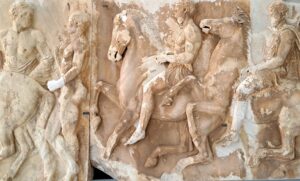
Acropolis Museum Athens 2026: Tickets, Tours & What Not to Miss
The Acropolis Museum in 2026: What You Actually Need to Know I’ve been to…