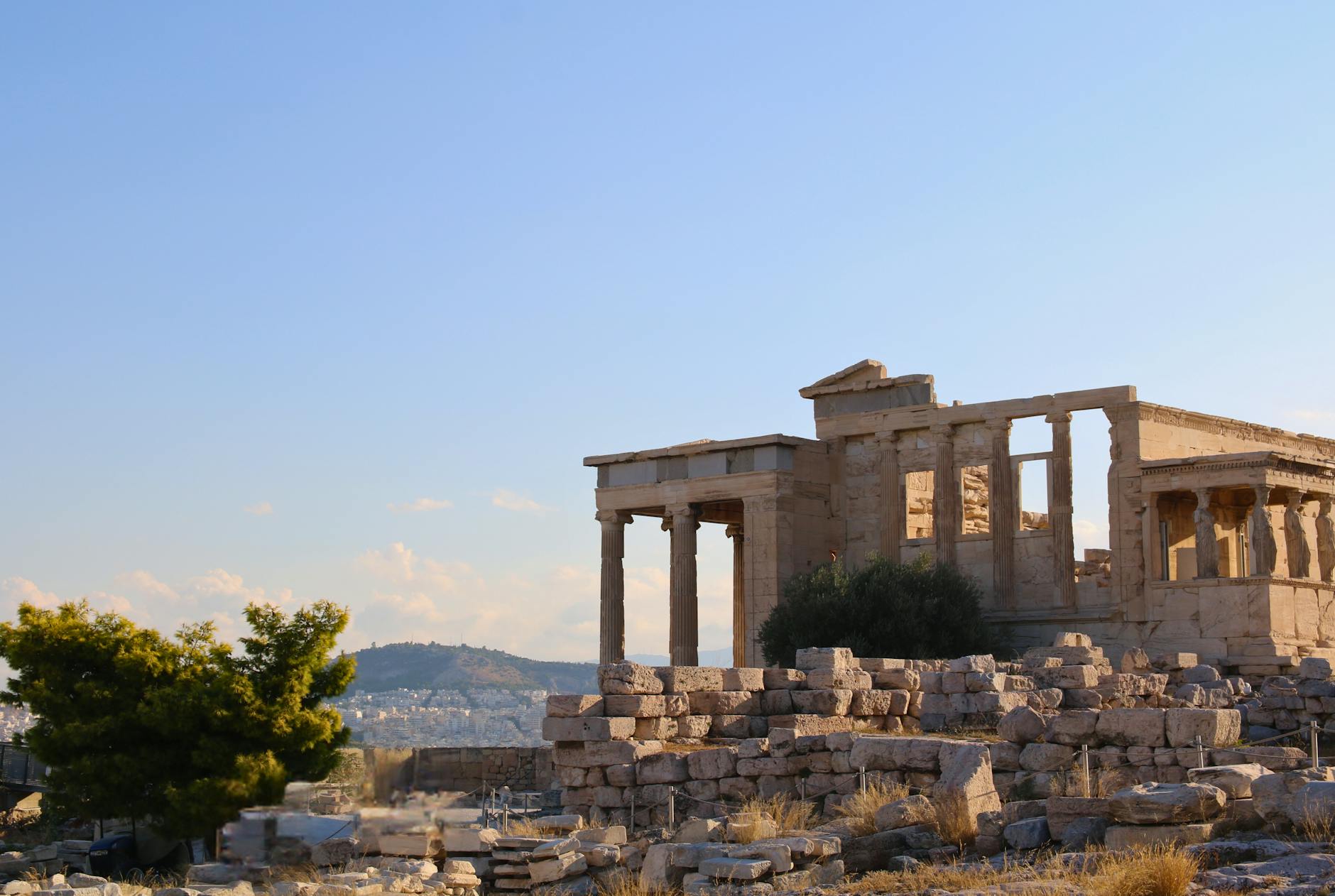
The Acropolis gets all the glory, but the Ancient Agora is where Athenians actually lived their lives. This was the marketplace, the law courts, the debating ground — the messy, breathing heart of the world’s first democracy. Walking through it now, you’re treading the same stones where Socrates argued himself into a death sentence. That’s not something you shake off quickly.
What Was the Ancient Agora?
‘Agora’ just means gathering place, but Athens’s version was doing a lot more than hosting a farmers’ market. From the 6th century BC onwards, this open ground at the foot of the Acropolis was where democracy actually ran: the citizen assembly met here, the council house (Bouleuterion) stood here, magistrates administered the city from here, and in 399 BC, Socrates was tried and condemned in these very courts. The political weight of the place is hard to overstate.
It was commercial too — workshops and stalls crowded the colonnades — and religious, with temples and sacred springs scattered throughout. Philosophers made it their office. The Stoic school of philosophy literally takes its name from the stoa where Zeno of Citium taught in the 3rd century BC. Every thread of Athenian civic life ran through this space at some point.
What to See at the Ancient Agora
The Temple of Hephaestus stops you in your tracks. Dedicated to the god of the forge and patron of craftsmen, this Doric temple dates to 449 BC and still has its original roof and most of its colonnade intact — which makes it one of the best-preserved ancient temples in all of Greece. Walk the full perimeter. The sculptural friezes showing the labours of Heracles and Theseus are worth the extra ten minutes.
The reconstructed Stoa of Attalos runs along the eastern edge of the site. King Attalos II of Pergamon had it built around 150 BC as a gift to Athens, and when archaeologists rebuilt it in the 1950s they used Pentelic marble and traditional construction methods. It now houses the Agora Museum, which is genuinely excellent and usually half-empty even when the site outside is busy. The collection covers everyday Athenian life — pottery, bronze tools, coins — but the ostraka are what stay with you. These are the actual pottery shards Athenians used in ostracism votes, inscribed with the names of politicians they wanted exiled. One names Themistocles, the naval commander who saved Greece at Salamis. Democracy, apparently, has always been complicated.
In the southwest corner, look for the low circular remains of the Tholos — where the executive committee of Athens’s council ate at public expense, effectively on permanent call. Nearby, the Metroon (city archive), the Bouleuterion council chamber ruins, and the foundations of the Stoa of Zeus are all identifiable if you pick up the site map at the entrance. Without it, these will just look like scattered stones.
Practical Information: Tickets, Hours, and Access
The Ancient Agora is open daily from 8am to 8pm, with shorter hours in winter — check ahead if you’re visiting between November and March. Standalone entry costs €10. The combined Acropolis ticket costs €30, is valid for five days, and covers the Agora, the Acropolis itself, the Acropolis Museum, the Roman Agora, and Kerameikos. If you’re spending more than a day in Athens and have any interest in archaeology at all, the combined ticket is the obvious call. The main entrance is on Adrianou Street in Monastiraki. The ground is uneven ancient paving throughout, with some slopes — flat, sturdy shoes, not sandals.
Tips for Visiting the Ancient Agora
Go early morning or late afternoon. The site is almost entirely exposed, and in July or August the midday heat is genuinely punishing — not uncomfortable, punishing. First thing in the morning you’ll also have it close to yourself, which makes a real difference to how the place feels. From the Agora, the Roman Agora is a five-minute walk northeast and Kerameikos is ten minutes northwest; string all three together and you’ve got a serious half-day through Athens’s archaeological core. Monastiraki is right there for food and coffee before or after. Browse our expert-led Athens tours that include the Ancient Agora in their itineraries.
🏛 Ready to Book?
Browse verified Athens tours — trusted by over 3.5 million travellers worldwide.
Search Tours on Viator →We earn a small commission at no extra cost to you.
Browse verified Athens experiences — instant confirmation, free cancellation on most tours.
Search Tours on GetYourGuide → We earn a small commission at no extra cost to you.Frequently Asked Questions
More Things to Do in Athens
Beyond food — top-rated experiences with free cancellation & instant confirmation.
Related Articles

Athens By Night: The Complete After Dark Guide 2026
Updated July 2026: Update — July 2026: The summer heat has pushed most Athenians…

Athens Digital Nomad Guide 2026: Coworking, Cost of Living & Visas
Updated September 2026: Updated September 2026: Athens is in full post-summer transition right now…

LGBTQ+ Nightlife in Athens 2026: Best Clubs, Bars & Gay Scene
Updated August 2026: Updated August 2026: Athens is deep into summer mode right now,…