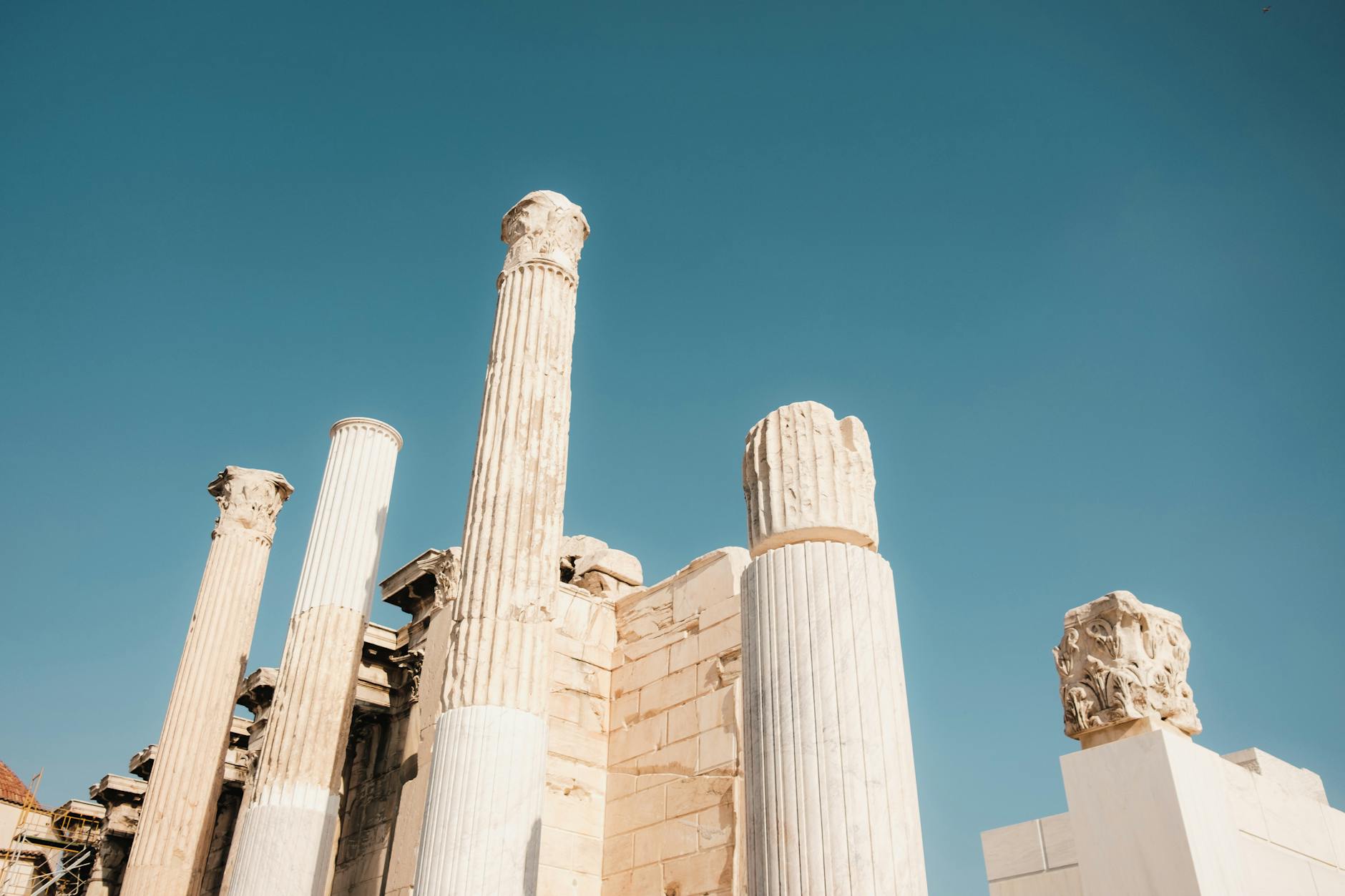
Few ancient monuments stop you cold the way the Acropolis does. It rises above Athens with this quiet, absolute authority — and the Parthenon, perched up there after nearly 2,500 years, has seen empires collapse while it just keeps standing. In 2026 it’s still one of the most powerful places you can put yourself on this planet. But arriving unprepared is a real mistake. Wrong shoes, no water, a two-hour queue in 38-degree heat — I’ve watched people’s entire morning unravel up there. Get the logistics right and the experience takes care of itself.
Tickets: Always Buy the Combined Ticket
The standard single-entry Acropolis ticket costs €20, but don’t buy it. Just don’t. The combined ticket costs €30 and opens up six major archaeological sites across Athens. That’s an extra €10 for an enormous amount of ancient history, and the ticket stays valid for five days — so you’re not rushing to cram everything into one sweaty afternoon.
The combined ticket covers the following sites:
- The Acropolis (including the Parthenon, Erechtheion, Propylaea, and Temple of Athena Nike)
- Theatre of Dionysus (on the south slope of the Acropolis)
- Ancient Agora (with the remarkably preserved Temple of Hephaestus)
- Roman Agora
- Kerameikos (the ancient cemetery, often overlooked and absolutely worth it)
- Temple of Olympian Zeus (the Olympieion)
Free admission applies on certain national holidays and the first Sunday of each month from November through March. Children under 18 from EU countries also enter free year-round. Always check the official Greek Ministry of Culture website before your visit for the most current concession details.
Online Booking: Non-Negotiable in Summer
Visiting between June and September? Book online before you leave your accommodation. Full stop. The Acropolis hits its daily visitor cap regularly during peak season — I’ve seen the queue snake down the hill on a Tuesday morning in July, easily 45 minutes of standing in direct sun before you even reach the gate. Some days they turn people away entirely.
You can buy tickets through the official e-ticketing portal of the Hellenic Ministry of Culture. A lot of people find it simpler to book a guided tour through platforms like Viator or GetYourGuide, which typically include skip-the-line access plus a guide who actually makes the ruins make sense. Honestly, a good guide changes everything here — the site is vast and the history is layered, and without context you’re mostly squinting at old stone. A guided group tour of the Acropolis usually runs between €25 and €45 per person depending on group size and inclusions, which is genuinely reasonable for what you get.
Even if you’d rather go it alone, booking a timed entry slot means you walk straight through the gate instead of standing around watching other people walk straight through the gate.
Opening Hours and Best Time to Visit
The Acropolis operates on two seasonal schedules:
- April to October: Open daily from 8:00am to 8:00pm
- November to March: Open daily from 9:00am to 5:00pm
The single best piece of timing advice? Arrive at opening time. In July and August the site fills fast, the marble pathways are properly crowded by 10:00am, and the temperature climbs past 35°C before you’ve finished your first circuit. Getting there at opening means cooler air, room to actually stand still and look at things, and photographs where the Parthenon isn’t framed by fifty strangers in matching tour group hats.
If an early start genuinely isn’t happening, late afternoon is your fallback. From around 5:00pm the light goes golden and gorgeous, the crowds thin out noticeably, and the heat drops to something human. Midday in midsummer though — just avoid it. It’s miserable and there’s no shade up there.
Getting There
Getting to the Acropolis from central Athens is straightforward. Take the Athens Metro — Line 2 (the red line) to Acropolis Station — and it’s roughly a five-minute walk to the main entrance at the Beule Gate on the western slope. The walk is easy, well-signposted, and takes you through the Makrygianni neighbourhood, which is pleasant enough that you won’t mind the stroll.
Monastiraki (Lines 1 and 3) also works well if you’re already in that area — it’s about 15 to 20 minutes on foot through streets full of cafes and souvenir shops, some worth stopping at and most not. Taxis and Beat, the rideshare app that dominates Athens, will drop you close to the entrance. Driving yourself is a bad idea. The surrounding streets are narrow, steep, and perpetually clogged — don’t bother.
What to Wear and What to Bring
The marble up there is ancient and genuinely slippery, especially after light rain. Flat, rubber-soled shoes are mandatory — site management actually enforces this. Heels, slippery flip-flops, smooth-soled dress shoes — all bad choices on polished stone that’s been worn smooth by millions of feet. Comfortable trainers are what you want.
Beyond footwear, a few practical items will significantly improve your visit:
- Hat and sunscreen: There is almost no shade on the Acropolis plateau itself. Sun protection is not optional in summer.
- Water: Bring at least one full bottle per person. There are limited vendors outside the main entrance but nothing once you are inside the site.
- Camera: Handheld photography is freely permitted and encouraged. However, tripods are not allowed on site, and drones are strictly forbidden over the entire Acropolis area.
- Light layers in winter: The plateau is exposed and can be quite cold and windy between December and February.
The Acropolis Museum: Do Not Skip It
At the foot of the hill, a short walk from the main entrance, the Acropolis Museum is one of the finest archaeological museums in the world — and a genuinely essential part of visiting the Acropolis properly. Admission is €15 and worth every cent. The original Parthenon sculptures are here, the Elgin Marbles debate plays out with real emotional weight in this building, and the Caryatid figures from the Erechtheion are extraordinary up close in a way they simply can’t be from halfway down a hill.
The building itself, designed by Bernard Tschumi, has glass floors with live excavations visible beneath your feet as you walk. Plan at least 90 minutes. A lot of people come out of the museum more moved than they were on the hill — because the detail you couldn’t see from a distance is suddenly right in front of you, and it’s remarkable.
Make the Most of Your Acropolis Visit
The Acropolis is one of those rare places that actually lives up to what everyone says about it. Get the practical things right — combined ticket, online booking, early arrival, decent shoes, water in your bag — and the visit becomes what it should be: slow, absorbing, and genuinely memorable. Add the Acropolis Museum and a couple of the other combined ticket sites across Athens and you’ve built yourself a serious itinerary. Whether you explore independently or join a guided tour through a platform like GetYourGuide or Viator for richer historical context, the Acropolis in 2026 is exactly what it has always been: one of humanity’s greatest achievements, still standing, still magnificent, and still worth every step of the climb.
Getting the Acropolis Right: What the Standard Advice Leaves Out
Most guides tell you to arrive early. That’s true but incomplete. In July and August, “early” means gates open at 8am and you want to be through them by 8:15. By 9:30 the rock is already uncomfortable; by 11am it’s genuinely dangerous for anyone not carrying serious water. The site has almost no shade. From October through April, a 9am arrival is fine and you’ll often have entire sections to yourself.
The entrance question matters more than most people realise. The main entrance on the northwest side funnels every tour group and cruise passenger onto a single path. Instead, use the southeast gate on Dionysiou Areopagitou street, directly above the Theatre of Dionysus. It’s a shorter, steeper climb but you arrive at the top from the east, which puts you at the Parthenon’s back before the crowd wave reaches the front. On summer mornings this alone buys you twenty quieter minutes up there.
On the ticket: the €30 combination ticket covers seven sites including the Ancient Agora, the Roman Agora, Kerameikos, and the Acropolis Museum. If you’re spending more than a day in Athens you will use it, and it’s valid for five days. As for skip-the-line, buying online removes the ticket queue but not the entrance queue — that’s a different line and it still builds fast. Arriving before 8:30am is the only reliable workaround.
The slopes themselves deserve an hour that most visitors spend walking straight past. On the south slope, the Odeon of Herodes Atticus is visible from above but you can walk through the adjacent path and see the full cavea up close. More overlooked: the Sanctuary of Dionysus Eleuthereus, just inside the southeast gate, with its relief carvings of the Gigantomachy still largely intact and almost always empty. The Stoa of Eumenes running west from the Theatre is also consistently ignored despite being unusually well-preserved.
For photographs without the selfie-stick thicket, these positions actually work:
- The Areopagus Hill (the flat rock northwest of the main entrance) gives a three-quarter view of the Parthenon’s north colonnade with the city below. Reach it from the Apostolou Pavlou pedestrian street.
- Filopappou Hill, about a fifteen-minute walk southwest, frames the entire west face at a distance — best in late afternoon light, typically uncrowded.
- From inside the site, position yourself at the southeast corner of the Parthenon early, before the crowd clusters at the northwest corner where the main path arrives.
🏛 Ready to Book?
Browse verified Athens tours — trusted by over 3.5 million travellers worldwide.
Search Tours on Viator →We earn a small commission at no extra cost to you.
Browse verified Athens experiences — instant confirmation, free cancellation on most tours.
Search Tours on GetYourGuide → We earn a small commission at no extra cost to you.Frequently Asked Questions
More Things to Do in Athens
Beyond food — top-rated experiences with free cancellation & instant confirmation.
Related Articles

New AthensToursHQ Guides — June 2026
Here are the latest guides we published on AthensToursHQ this month. Fresh, hand-written, and…

Athens Street Art Tour 2026: Graffiti, Murals & Where to Find Them
Updated September 2026: Update — September 2026: Athens in early autumn is genuinely one…

Best Museums in Athens 2026: Beyond the Acropolis Museum
The Athens museums scene is richer than most visitors realize. Everyone makes a beeline…