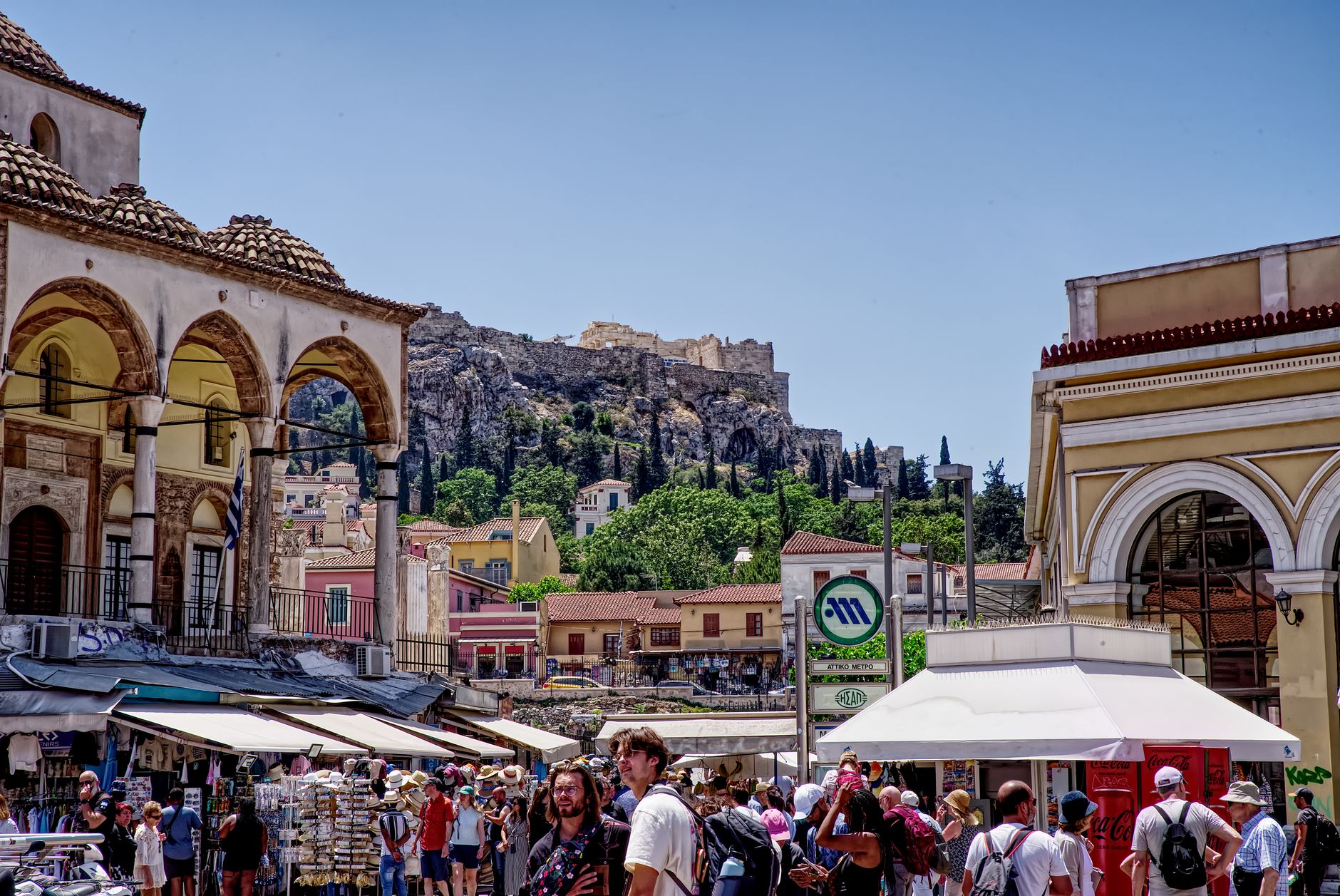
Athens ancient sites get talked about like there’s only one worth visiting — but the city is practically layered in archaeology, and most of it sees a fraction of the Acropolis crowds. If you’ve already done the big hill or want something quieter, here’s what’s actually worth your time in 2026.
Temple of Olympian Zeus: Bigger Than You Expect
Fifteen columns of Pentelic marble standing 17 meters tall — this place earns its reputation. The Temple of Olympian Zeus took over 600 years to complete, which honestly says something about ancient project management. What surprises most people is the sheer scale. Even the one column that toppled in an 1852 storm, now lying in a collapsed heap on the ground, gives you a real sense of how massive each piece was.
Entry in 2026 costs €6 standalone, or it’s included in the combined ticket (€30) that covers the Acropolis, Agora, and several other sites — good value if you’re planning a dedicated archaeology day. The site opens at 8am and closes at 8pm in summer. Go early or after 5pm. Midday in July here is genuinely brutal, and the site offers almost zero shade.
The location is also great. You’re right at Hadrian’s Arch, which you can photograph from the street for free, and the Zappeion gardens are a five-minute walk if you need to sit down and process what you’ve just seen.
The Roman Agora: Almost Always Quiet
Most visitors head straight for the Ancient Agora (more on that shortly) and skip the Roman one entirely. That’s their loss. The Roman Agora — built under Julius Caesar and Augustus — is compact, manageable, and on most mornings you can wander around with barely another tourist in sight. The Tower of the Winds is here, an octagonal marble clocktower from the 1st century BC that still has its wind god reliefs intact. It’s one of the best-preserved ancient structures in Greece and people walk past it on their way to grab coffee.
The site entrance is on Pelopida Street in Monastiraki. Entry is covered by the combined ticket or €4 on its own. Give it an hour — it’s not huge, but it rewards slow walking.
Ancient Agora: Worth It for the Temple Alone
The Ancient Agora gets overshadowed by the Acropolis literally and figuratively, but the Temple of Hephaestus sitting at its western edge is arguably the best-preserved ancient Greek temple anywhere. Better than anything in Rome. Better than most of what you’ll see in the rest of Greece. It’s been standing, largely intact, since the 5th century BC.
The Stoa of Attalos — a faithful reconstruction from the 1950s — now houses the Agora Museum, and the collection inside is genuinely interesting. Pottery shards with names scratched on them (ostraka, used for voting people into exile), bronze ballots, everyday objects. It makes the ancient city feel lived-in rather than mythologized.
Budget 90 minutes here minimum. The site closes at 8pm in peak season. If you want a guided context before wandering solo, GetYourGuide has a few morning small-group tours that combine the Agora with the Acropolis Museum without the usual cattle-herding feel.
Kerameikos: The Cemetery That Changes How You See Athens
Nobody talks about Kerameikos, and I don’t understand why. This was Athens’ ancient cemetery and potters’ district, sitting outside the old city walls along the Sacred Way to Eleusis. The grave markers here — marble stelae, stone bulls, sculpted vessels — are genuinely moving. There are originals still standing in situ, alongside excellent reproductions (the real ones are in the National Archaeological Museum).
The small on-site museum is excellent and almost always empty. You can see the actual excavated remains of the Dipylon Gate, once the largest city gate in ancient Greece. And because it’s in the slightly gritty Gazi neighborhood, the contrast between ancient marble and passing motorcycles is very Athens.
Entry is €8 or included in the combined ticket. It opens at 8am. Honestly, start here before the heat builds and before the tour groups get going.
A Few Practical Notes for 2026
- Combined ticket: €30 and valid for five days across multiple sites — genuinely worth it if you’re spending more than two days in the city.
- Crowds: The Acropolis peaks between 10am and 1pm. Every other site on this list is quietest during those same hours because everyone is up the hill.
- Booking tours: For guided context at lesser-known sites, Viator has several archaeology-focused walking tours that bundle two or three of these together, usually running around €35-55 per person.
- Heat: June through August, carry water. Every site has minimal shade and the marble reflects heat aggressively.
- Shoes: The marble and stone paths are uneven and sometimes slippery. Sandals work fine but flat-soled ones are better than anything with a heel.
The Honest Case for Skipping the Crowds
Athens in 2026 is going to be busy. Tourism keeps climbing, the Acropolis queue can hit two hours by mid-morning in July, and the main sites around Monastiraki fill up fast. But the Temple of Zeus at 8:15am with the light coming in low, the Roman Agora with a coffee from a nearby Monastiraki cafe, Kerameikos on a weekday morning — these feel like a completely different city. Slower, more honest, more interesting. The archaeology doesn’t stop being remarkable just because fewer people are standing in front of it.
🏛 Ready to Book?
Browse verified Athens tours — trusted by over 3.5 million travellers worldwide.
Search Tours on Viator →We earn a small commission at no extra cost to you.
Browse verified Athens experiences — instant confirmation, free cancellation on most tours.
Search Tours on GetYourGuide → We earn a small commission at no extra cost to you.Frequently Asked Questions
More Things to Do in Athens
Beyond food — top-rated experiences with free cancellation & instant confirmation.
Related Articles

National Archaeological Museum Athens 2026: Complete Guide & Must-See Exhibits
Why This Museum Deserves a Full Day The National Archaeological Museum Athens rewards anyone…

Athens on a Budget 2026: How to Do Athens for €50/Day
Athens on €50 a Day: It’s Tight, But Totally Doable I’ll be honest with…

New AthensToursHQ Guides — July 2026
Updated August 2026: August 2026 update: The August heat in Athens is genuinely brutal…