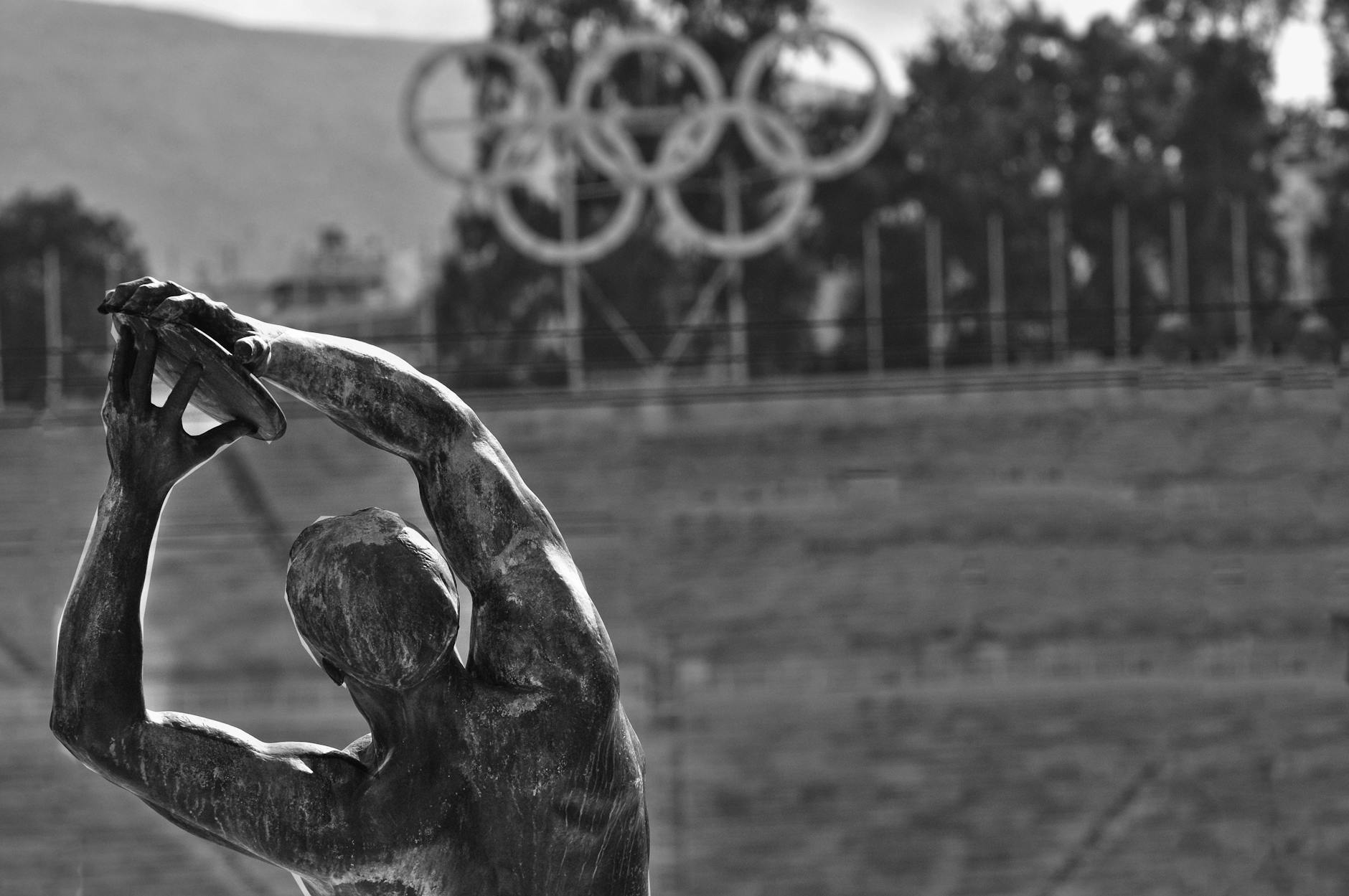
The Panathenaic Stadium is one of those places that actually lives up to the hype — and I don’t say that lightly. Built entirely from white Pentelic marble, this ancient venue sits in a natural hollow just east of the Acropolis, and the moment you walk through the tunnel onto the track, something clicks. You’re standing where the first modern Olympic Games were held in 1896. That’s not a small thing.
A Bit of History Worth Knowing
The original stadium dates to 330 BC, built for the Panathenaic Games held in honour of Athena. It was later renovated by Herodes Atticus in 144 AD — the same guy who funded the Odeon on the Acropolis slope. Then it sat in ruins for centuries until Evangelis Zappas pushed for its restoration in the 19th century. The full marble reconstruction was funded by Georgios Averoff ahead of the 1896 Athens Olympics, which is why you’ll see his statue at the entrance. The stadium held 80,000 spectators back then. Standing in it now, that number feels both enormous and somehow believable.
Getting There in 2026
The stadium is at Leoforos Vasileos Konstantinou, about a 20-minute walk from Syntagma Square. Honestly, the walk is worth it — you pass through the National Garden and get a good feel for that part of Athens. The nearest metro stop is Evangelismos on Line 3 (blue line), roughly a 10-minute walk from there. Taxis and Bolt are easy from anywhere central; expect to pay €5–8 from Monastiraki.
Don’t bother with a guided bus tour to get here specifically — the site is compact enough to explore solo, and you’ll spend more time waiting for groups than actually looking at things. That said, if you want broader context about ancient Athens bundled with the Acropolis and Agora, booking a combined walking tour through Viator or GetYourGuide can genuinely be worth it. Some of those guides know details you’d never find on the information panels.
Opening Hours and Ticket Prices
As of 2026, the stadium is open daily. Summer hours (April through October) run from 8:00 AM to 7:00 PM. Winter hours (November through March) are 8:00 AM to 5:00 PM. It’s closed on a handful of Greek public holidays, so check the official site before you go if you’re visiting around Easter or Christmas.
- Adult ticket: €10
- Reduced (students, seniors over 65): €5
- Children under 5: Free
- Combined ticket with audio guide: €15
The audio guide is actually decent — covers 22 stops and takes about 45 minutes if you do all of them. Worth grabbing if you’re interested in the Olympic history specifically. Tickets can be bought at the entrance; there’s rarely a line except on summer mornings when cruise ship tours pile in around 10 AM. Get there before 9:30 or after 2 PM to avoid that.
What’s Inside
Beyond the track itself, the museum beneath the stands is genuinely interesting and often overlooked. It houses original Olympic torches from every Games since 1896 — the collection is oddly moving when you realise each one represents an entire Games. There are also medals, photographs, and a model showing how the stadium looked in antiquity. Give yourself 20–30 minutes in there.
The stands are open to walk. You can climb to the very top row and look out over Athens — on a clear day you can see the Acropolis, Lycabettus Hill, and on really clear winter mornings, the sea toward Piraeus. The marble seating is smooth and cold even in summer, so if you’re wearing shorts, that’s your warning.
Running on the Track
Yes, you can actually run on it. The 400-metre track is open to visitors, and a surprising number of people show up in running shoes specifically for this. There’s something absurd and wonderful about jogging where Spyridon Louis won the marathon in 1896. The surface is a compacted gravel and earth mix — not rubberised like modern tracks — so it’s softer than you’d expect. One lap takes most people around 2.5 to 3 minutes at a casual pace. You won’t get the place to yourself, but early morning visits (right at opening) come close.
Practical Tips for 2026
- Wear comfortable shoes — the marble steps are steep and slippery when wet.
- Bring water — there’s a small café near the entrance but it’s overpriced and the selection is limited.
- Photography is free throughout the site. Tripods need prior approval but nobody seems to enforce this for small travel tripods.
- Combine it with the nearby sites — the Byzantine and Christian Museum is literally across the street and completely underrated. The National Gallery is a 10-minute walk.
- Avoid Sundays in July and August — it gets genuinely packed with tour groups and the heat bouncing off all that marble is brutal by midday.
Is It Worth Your Time?
Short answer: yes, especially if you have any interest in Olympic history or Greek antiquity. It takes maybe 90 minutes to do properly — track, stands, museum — and €10 is fair for what you get. It’s not as overwhelming as the Acropolis, which is actually a point in its favour. You can breathe here. You can sit in the stands and think. That’s rarer than it sounds in Athens in summer.
Just don’t expect it to be quiet. It’s a major stop on the Athens tourist circuit, and it earns that status.
🏛 Ready to Book?
Browse verified Athens tours — trusted by over 3.5 million travellers worldwide.
Search Tours on Viator →We earn a small commission at no extra cost to you.
Browse verified Athens experiences — instant confirmation, free cancellation on most tours.
Search Tours on GetYourGuide → We earn a small commission at no extra cost to you.Frequently Asked Questions
More Things to Do in Athens
Beyond food — top-rated experiences with free cancellation & instant confirmation.
Related Articles
Athens Film Locations 2026: Movie Tour & Where Famous Films Were Shot
What Exploring Athens Film Locations Is Actually Like An Athens film locations tour puts…

Athens Hidden Gems: Secret Spots Only Locals Know 2026
Updated June 2026: Updated June 2026: The stretch along Kallidromiou Street in Exarchia has…

Athens Easter 2026: Orthodox Traditions, Processions & Where to Celebrate
If you want to experience Athens Easter the way Greeks actually live it —…