Why Ancient Corinth Deserves a Full Day
An Ancient Corinth day trip from Athens is one of those excursions that consistently punches above its weight — and yet most visitors either skip it entirely or rush through in two hours thinking they’ve seen it. They haven’t. Corinth was one of the wealthiest, most strategically important cities in the ancient Mediterranean world, and what’s left on the ground today tells that story better than almost any guidebook can.
I’ve done this route three times now, in different seasons, with different groups. Here’s what actually matters.
Getting from Athens to Ancient Corinth
By Train or Bus
The cheapest option is the suburban rail (Proastiakos) from Athens Larissa Station to Kiato, with a change at Corinth station. Budget around €8–10 each way and roughly 90 minutes total. It’s fine, but the Corinth train station is not close to the archaeological site — you’ll need a taxi for the last stretch, which adds another €10–12 and some waiting around.
KTEL buses from Athens’ Kifissos terminal run to Corinth city regularly. Tickets are around €8. Again, you’ll need local transport to reach the ruins. Buses leave roughly every 30–45 minutes from early morning.
By Car
Renting a car is honestly the most comfortable option if you’re with two or more people. Athens to Ancient Corinth is about 85 kilometers on the E94 highway, and on a good morning you’re there in 75 minutes. Tolls run around €2.80 each way. Parking at the site is free and usually easy to find outside summer peak hours.
Guided Tours
If logistics stress you out, a guided day trip removes all the friction. Operators on Viator and GetYourGuide run full-day tours from Athens for €55–90 per person depending on group size and what’s included. Most combine Ancient Corinth with the Corinth Canal and sometimes the Epidaurus theater. The transport, entry fees, and a licensed guide come bundled. Worth it if you want context rather than just photos.
What to See at Ancient Corinth
The Temple of Apollo
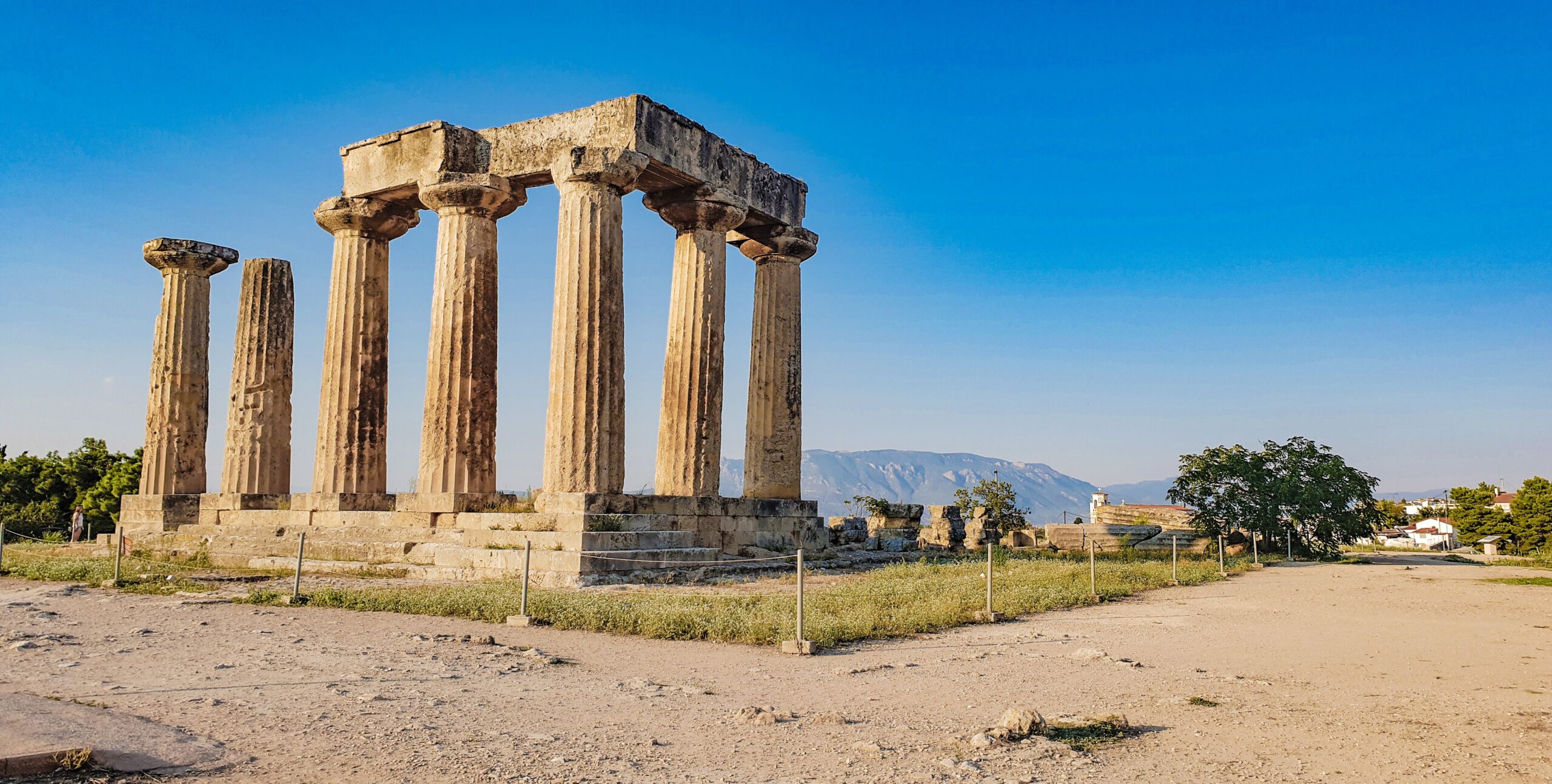
Seven monolithic Doric columns still standing from the 6th century BC — this is the image everyone comes for. What surprises people is the scale. These columns are massive, the drums unfluted compared to Parthenon standards, and they feel genuinely ancient in a way that some Greek sites somehow don’t. Go early. By 10:30am in summer, tour groups arrive in waves and the area around the temple gets genuinely crowded. Before 9am, you might have it almost to yourself.
The Agora and Bema
The open marketplace area sprawls considerably, and it’s here that the Roman city really shows itself. The Bema — the raised speaker’s platform — is where the Apostle Paul was reportedly brought before the proconsul Gallio around 52 AD. There’s a marble slab marking it. For anyone with an interest in early Christian history, this is a genuinely significant spot. Most people walk past it without realizing what it is.
The Archaeological Museum
Don’t skip this. I know museum fatigue is real, especially after a morning in Athens, but the Corinth museum has some excellent pieces — particularly the terracotta figurines from the sanctuary of Demeter, some extraordinary Roman-period mosaics, and pottery that spans several centuries. Entry is included with your site ticket (around €8 in 2026). Spend at least 45 minutes here. It’s small enough to be digestible.
The Corinth Canal
About 5 kilometers from the ancient site, the canal cuts through the Isthmus of Corinth in a narrow, almost violent slash through limestone cliffs. It’s 6.3 kilometers long and drops nearly 80 meters to the water. The views from the pedestrian bridge are genuinely impressive — not so much for any aesthetic beauty but for the engineering audacity of cutting that channel by hand in the late 19th century.
There are tourist shops and a café here. The café is overpriced and mediocre. If you need coffee, buy it elsewhere. The canal itself takes maybe 30–45 minutes to properly see, and if you’re driving, it’s an easy detour on the way back to Athens.
Practical Tips for 2026
- Opening hours: The site typically opens at 8am and closes around 6pm in summer, earlier in winter. Check the Greek Ministry of Culture website closer to your visit date for confirmed 2026 hours.
- Entry fee: Around €8 for adults in 2026, combined site and museum. EU students under 25 get free entry. Always bring your passport or student ID.
- Best time to visit: April, May, and October are the sweet spots. July and August get genuinely brutal — 38°C in direct sun with minimal shade across the agora.
- What to bring: Water (more than you think), sunscreen, a hat, and comfortable shoes. The ground is uneven and some areas have no shade at all.
- Lunch options: The ancient site village has a few tavernas. Taverna Marinos near the site entrance is basic but reliable — grilled meats, village salad, local wine. Don’t expect anything fancy, but it won’t hurt you.
How Long Do You Need?
Two hours feels rushed. Three to four hours is comfortable if you include the museum properly. Add another hour for the canal. A full day — say, leaving Athens at 8am and back by 6pm — lets you do everything without feeling like you’re running a marathon.
If you’re combining with Epidaurus (about 50km further), that requires an early start and some serious energy. It’s doable, but it’s a lot. I’d personally prioritize one or the other and do each properly rather than both superficially.
🏛 Ready to Book?
Browse verified Athens tours — trusted by over 3.5 million travellers worldwide.
Search Tours on Viator →We earn a small commission at no extra cost to you.
Browse verified Athens experiences — instant confirmation, free cancellation on most tours.
Search Tours on GetYourGuide → We earn a small commission at no extra cost to you.Frequently Asked Questions
More Things to Do in Athens
Beyond food — top-rated experiences with free cancellation & instant confirmation.
Related Articles

Acropolis Tours Athens: Complete Visitor Guide 2026
Updated June 2026: We’ve just returned from Athens in peak summer season and wanted…

Plaka Walking Tours Athens: Explore the Oldest Neighborhood 2026
Updated June 2026: We’ve just returned from Athens in early June and can confirm…

Athens Cruise Port Guide 2026: Best Day Tours from Piraeus
Athens Cruise Port Guide 2026: Making the Most of Your Day in Piraeus Piraeus…