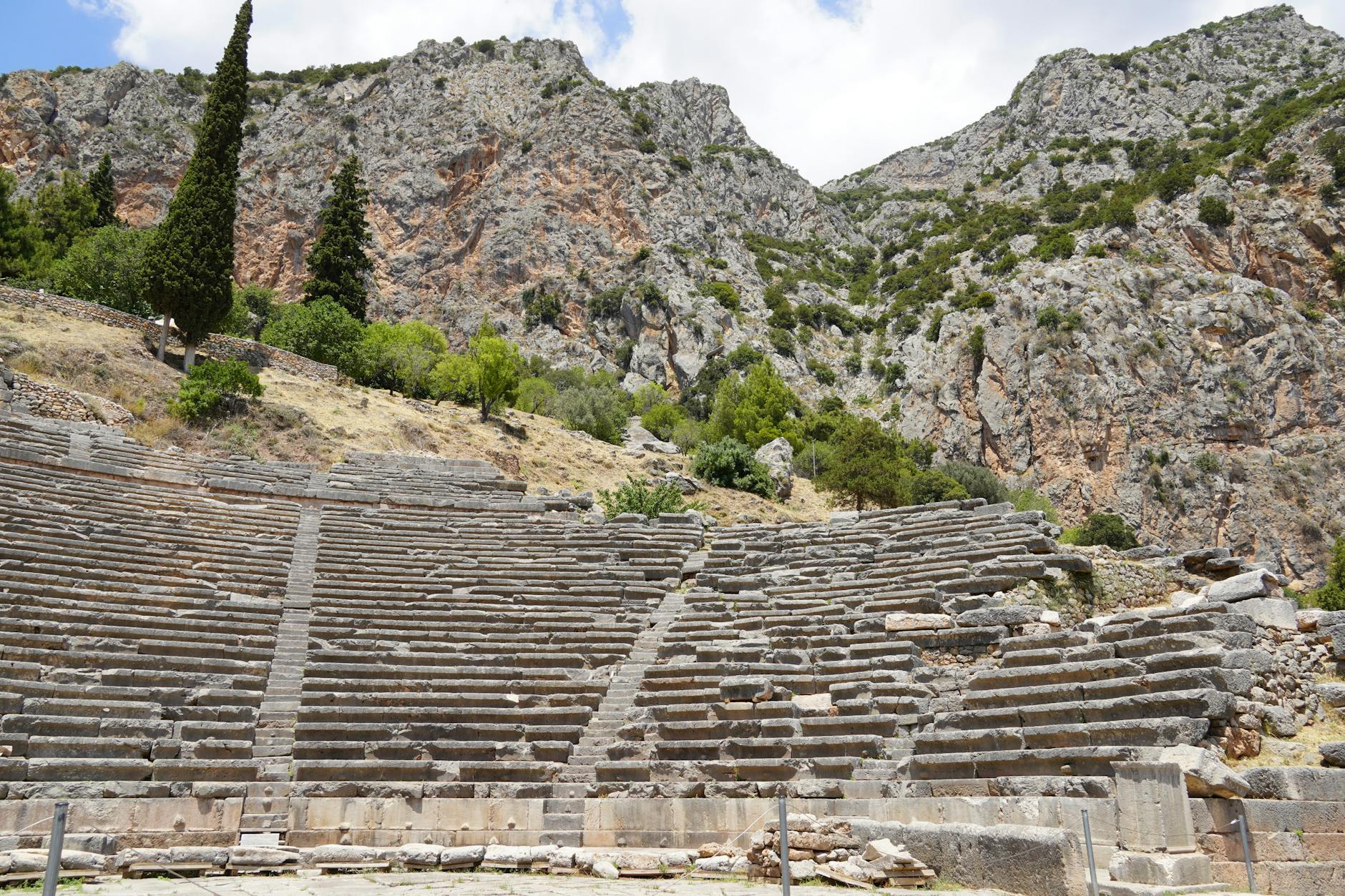
Planning a Delphi day trip from Athens is one of the smartest decisions you can make if you’re spending a week in Greece. I’ve done this route twice now, and honestly, it beats a lot of what people drag themselves to see closer to the city. About 180 kilometers northwest of Athens, Delphi sits on the slopes of Mount Parnassus at around 570 meters elevation — and the setting alone is worth the journey before you’ve even thought about the ancient ruins.
Getting There: Bus, Car, or Guided Tour?
The cheapest option is the KTEL bus from Athens’ Liosion Bus Terminal (Terminal B), running daily with a journey time of roughly 3 hours. A one-way ticket costs around €17-19 in 2026. The terminal is a bit grim and confusing if you don’t know Athens well — give yourself an hour to find the right platform. Buses leave a few times a day, but the early morning departure around 7:30am gets you there with maximum time on site.
Renting a car gives you freedom to stop at the Arachova village on the way (do this — more on that shortly) and control your timing around the site. The drive takes about 2.5 hours via E75 and then the scenic mountain road. Parking near the archaeological site is straightforward and usually free.
If you’d rather not think about logistics, a guided day trip booked through Viator or GetYourGuide typically runs €55-85 per person and includes transport, sometimes a licensed guide, and occasionally lunch. The quality varies wildly — read reviews carefully and pick something with recent feedback specifically mentioning the guide’s knowledge of Delphi specifically, not just the drive.
The Archaeological Site: What to Actually Prioritize
The site opens at 8:00am and closes at 8:00pm in summer (shorter hours October through March). A combined ticket covering both the archaeological site and museum costs €12 in 2026. Students and EU citizens under 25 get in free — bring your ID.
The Sacred Way and Temple of Apollo
Start at the bottom of the Sacred Way and walk uphill. Everyone does this slowly, and rightly so — every few meters there’s another treasury building or votive monument with a story attached. The Athenian Treasury is in surprisingly good condition. The Temple of Apollo is the centerpiece, and standing among those six remaining columns while staring out over the Pleistos valley genuinely gives you pause. This is where the Oracle supposedly delivered her prophecies. The whole thing feels weirdly powerful even with 200 tourists milling around.
The Theatre above the temple has near-perfect acoustics and a view over the entire sanctuary and valley below that photographs terribly but looks extraordinary in person. Get there before 10am if you want it mostly to yourself. The Stadium further up the hill requires a bit more walking but most casual visitors skip it — don’t skip it. It’s remarkably preserved and you can stand on the actual track.
The Delphi Archaeological Museum
This museum is genuinely excellent and often overlooked by people who spend all their energy on the outdoor site. The Charioteer of Delphi — a bronze statue from 478 BC — is one of the best-preserved ancient bronzes anywhere in the world. The inlaid glass eyes are unsettling in the best possible way. Budget at least 90 minutes here. The museum also holds the Sphinx of the Naxians and significant pieces from the Siphnian Treasury that explain the mythology in ways the outdoor site can’t.
Arachova: Worth Every Detour Kilometer
Fourteen kilometers east of Delphi on the mountain road, Arachova is a proper Greek mountain village that hasn’t entirely surrendered to tourism yet. Stop here for lunch. The local specialty is formaela cheese — a hard sheep’s milk cheese you can grill — and the local red wine from nearby vineyards is rough and good. Lunch at a taverna on the main street will run you €14-20 per person with wine. The village also sells handwoven textiles that are actually made locally, which is increasingly rare anywhere in Greece.
Practical Logistics for 2026
- Best time to visit: April-June and September-October avoid summer peak crowds and extreme heat. July and August are brutal at this elevation and still packed.
- Morning vs afternoon: Arrive at opening — 8am — and you’ll have the Sacred Way nearly to yourself for the first hour. By 11am it’s crowded.
- Wear proper shoes: The site is all uphill on uneven stone paths. Sandals are a bad idea.
- Water and snacks: Bring your own. The café near the museum entrance is overpriced and underwhelming.
- Photography: No restrictions on cameras at the outdoor site. Flash photography is prohibited inside the museum.
- Mobile data: Spotty on the mountain road. Download offline maps before you leave Athens.
Where to Stay If You’re Not Day-Tripping
If you have flexibility, staying overnight in Delphi village changes the experience completely. After the tour groups leave around 5pm, the site closes but the town becomes genuinely peaceful. The Hotel Acropole or Hotel Pan both offer clean, simple rooms for €60-90 in 2026 with mountain-facing balconies. Waking up early and watching mist sit in the valley before the crowds arrive is worth the extra night.
One Honest Warning
Delphi is not a secret. On peak summer days, the Sacred Way can feel like a slow shuffle through a museum corridor rather than an ancient sanctuary. If you’re coming in August, book the earliest possible bus or departure time, accept the crowds, and focus on the museum in the midday heat when people retreat to the cafés. The site itself survives the crowds better than you might expect — it’s physically large enough that you can usually find a quiet corner near the Castalian Spring or up near the Stadium.
🏛 Ready to Book?
Browse verified Athens tours — trusted by over 3.5 million travellers worldwide.
Search Tours on Viator →We earn a small commission at no extra cost to you.
Browse verified Athens experiences — instant confirmation, free cancellation on most tours.
Search Tours on GetYourGuide → We earn a small commission at no extra cost to you.Frequently Asked Questions
More Things to Do in Athens
Beyond food — top-rated experiences with free cancellation & instant confirmation.
Related Articles
Cape Sounion Sunset: Temple of Poseidon at Golden Hour
Updated July 2026: Update, July 2026: Summer crowds at Cape Sounion have been noticeably…
Hydra Island Day Trip from Athens 2026: The Car-Free Greek Island
Updated September 2026: Updated September 2026: The Hellenic Seaways schedule shifted again this summer,…
Meteora Day Trip from Athens 2026: Monasteries in the Sky
Updated September 2026: Updated September 2026: Train schedules between Athens and Kalambaka shifted again…