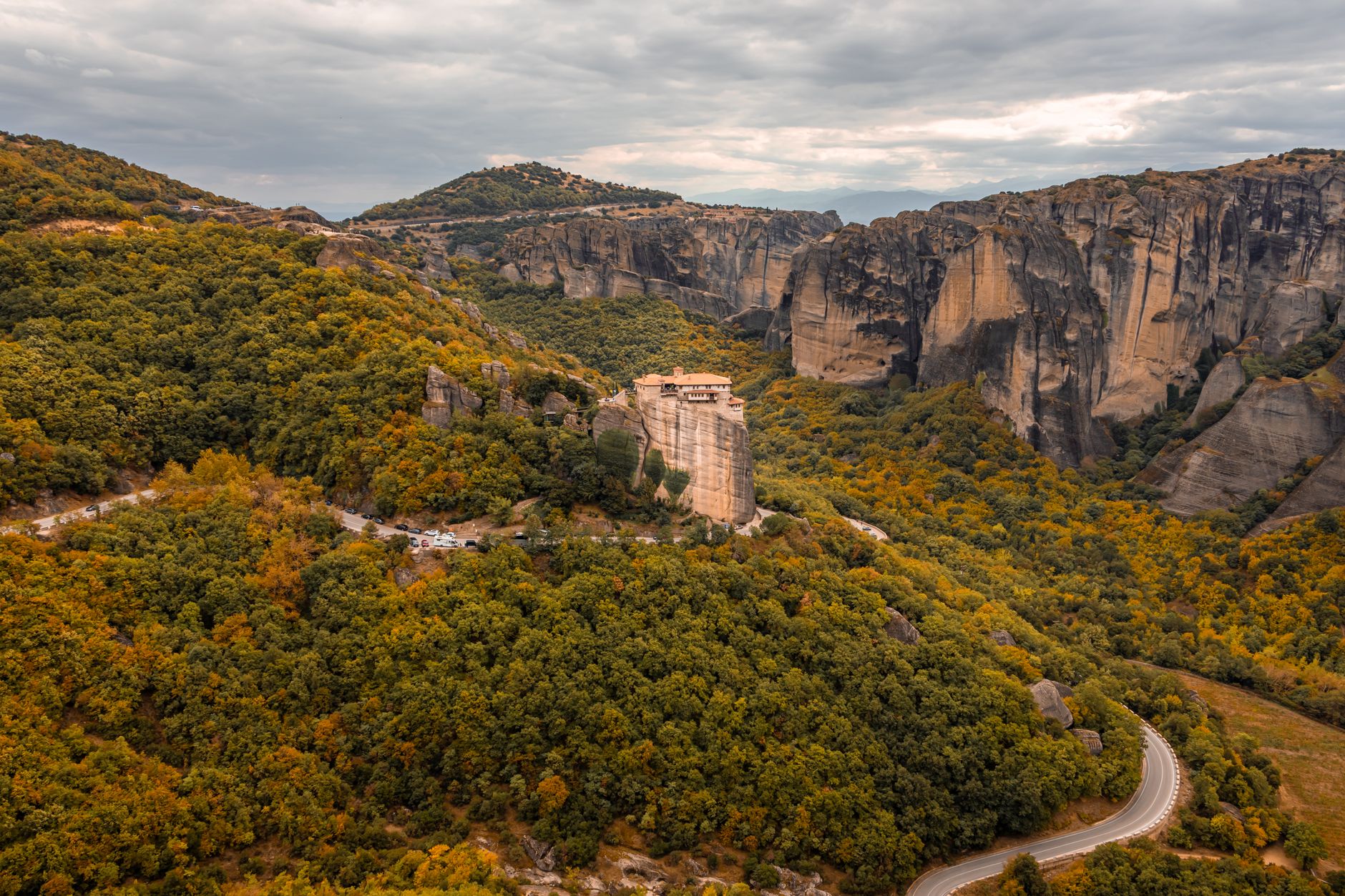
Getting There: Four Hours That Are Actually Worth It
A Meteora day trip from Athens is genuinely one of the better long-day excursions you can do in Greece, but let’s be honest about what you’re signing up for. It’s roughly 350 kilometers each way, and depending on your transport choice, you’re looking at four to four and a half hours in each direction. That’s a long day. Pack snacks, download something to watch on the train, and accept that you’ll be tired by the time you get back to Athens at 9 or 10pm.
Train vs. Guided Tour Bus: The Real Comparison
The InterCity train from Athens Larissa Station runs to Kalambaka, the town at the base of the rock formations, in about four hours and fifteen minutes. A second-class ticket costs around €23-26 each way in 2026, and the morning departure leaves around 8:30am. The scenery through Thessaly is genuinely good — you pass through the Vale of Tempe and get your first glimpse of the Pindus mountains.
The catch with the train: you arrive in Kalambaka and then need to figure out taxis or local buses to actually reach the monasteries, which are spread across the plateau above town. Factor in an extra €15-20 for taxi runs between sites. You also get limited time before the last train back.
A guided tour bus solves the logistics headache completely. Departures from central Athens hotels happen around 7:30-8am, you get a guide who explains what you’re actually looking at, and transport between monasteries is handled. Prices on platforms like GetYourGuide or Viator run €75-110 per person depending on group size and whether lunch is included. For solo travelers or couples, this usually makes more financial and practical sense than the train.
Which Monasteries to Actually Visit
There are six active monasteries in Meteora, but a day trip realistically gives you two or three, depending on pace. Here’s the honest breakdown:
- Megalo Meteoro (Great Meteoron) — The largest, dating to the 14th century. Worth the 300 steps. Has the best museum showing monastic life and Byzantine artifacts. Opens 9am, closed Tuesdays.
- Varlaam Monastery — A short walk from Megalo Meteoro, slightly less crowded, and the frescoes inside are genuinely striking. Closed Fridays.
- Agia Triada (Holy Trinity) — The one James Bond fans recognize from For Your Eyes Only. More steps than you expect (around 140), but the rock pillar setting is more dramatic than the others.
- Roussanou — Good for photos from the outside even if you don’t go in. The bridge connecting the monastery to the cliff path is photogenic.
Skip Agios Nikolaos if you’re short on time — it’s fine but the least interesting of the six.
Dress Code: Non-Negotiable
Every single monastery enforces a dress code and they mean it. Men need long trousers — not shorts, not rolled-up pants. Women need covered shoulders and a skirt or dress below the knee (or long trousers). Some monasteries lend wrap skirts at the entrance, but they’re often synthetic and uncomfortable in summer heat. Just pack a lightweight scarf that doubles as a shoulder cover and wear long linen trousers. Serious. People get turned away every single day.
Comfortable shoes matter too. The paths are uneven stone, and those steps at Agia Triada are steeper than they look in photos.
Best Photo Spots (Without the Tour Group Stampede)
The classic viewpoint most tour buses stop at is the Psaropetra overlook on the road between Kalambaka and the monasteries — you’ll see it on every Instagram post. It’s genuinely good but gets congested between 11am and 2pm. If you’re on a self-guided day, get there before 9:30am.
The Sunset Rock above Kalambaka town offers a different angle looking back at the formations from below — less visited and better in late afternoon light. The walking trail from town takes about 25 minutes.
For the iconic shot of multiple rock pillars together, the viewpoint between Varlaam and Megalo Meteoro gives you both monasteries in the same frame. Early morning mist on the valley below occasionally rolls in between May and October — purely luck, but spectacular when it happens.
Practical Details for 2026
Monastery entry fees are €3 per site, cash only at most. Bring €20 in small bills. Most monasteries close for a midday break between noon and 3pm, which is annoying if your tour is badly timed — check this when booking because some cheaper tours rush you through during the closure window and you end up waiting around Kalambaka eating mediocre souvlaki.
Summer (July-August) sees the worst crowds. Aim for May, early June, September, or October if possible. October in particular has lower visitor numbers and the light on the rock faces in the afternoon is exceptional. Winter visits are possible and eerily quiet, but about a third of the monasteries reduce hours or close for extended maintenance.
Lunch in Kalambaka town is generally fine without being special. Taverna Meteora on the main square does a decent lamb chop and a cold Mythos for around €14-16. Most guided tours stop here or somewhere similar — it’s serviceable.
Is a Day Trip Enough?
Honestly? For most people, yes — but you’ll leave wishing you had one more hour. If you can swing an overnight in Kalambaka or the village of Kastraki (quieter, closer to the rocks), the early morning light on the formations before tour buses arrive is worth the extra night. It’s a different experience entirely. But if Athens is your base and you’re working with limited time, a well-organized day trip covers the essentials without compromise.
🏛 Ready to Book?
Browse verified Athens tours — trusted by over 3.5 million travellers worldwide.
Search Tours on Viator →We earn a small commission at no extra cost to you.
Browse verified Athens experiences — instant confirmation, free cancellation on most tours.
Search Tours on GetYourGuide → We earn a small commission at no extra cost to you.Frequently Asked Questions
More Things to Do in Athens
Beyond food — top-rated experiences with free cancellation & instant confirmation.
Related Articles
Acropolis Museum Athens 2026: Tickets, Tours & What Not to Miss
The Acropolis Museum in 2026: What You Actually Need to Know I’ve been to…
Glyfada & Vouliagmeni: Best Beach Day Trips from Athens 2026
Updated September 2026: Updated September 2026: The Attica coast has had a brutal summer…
Plaka Walking Tours Athens: Explore the Oldest Neighborhood 2026
Updated June 2026: We’ve just returned from Athens in early June and can confirm…