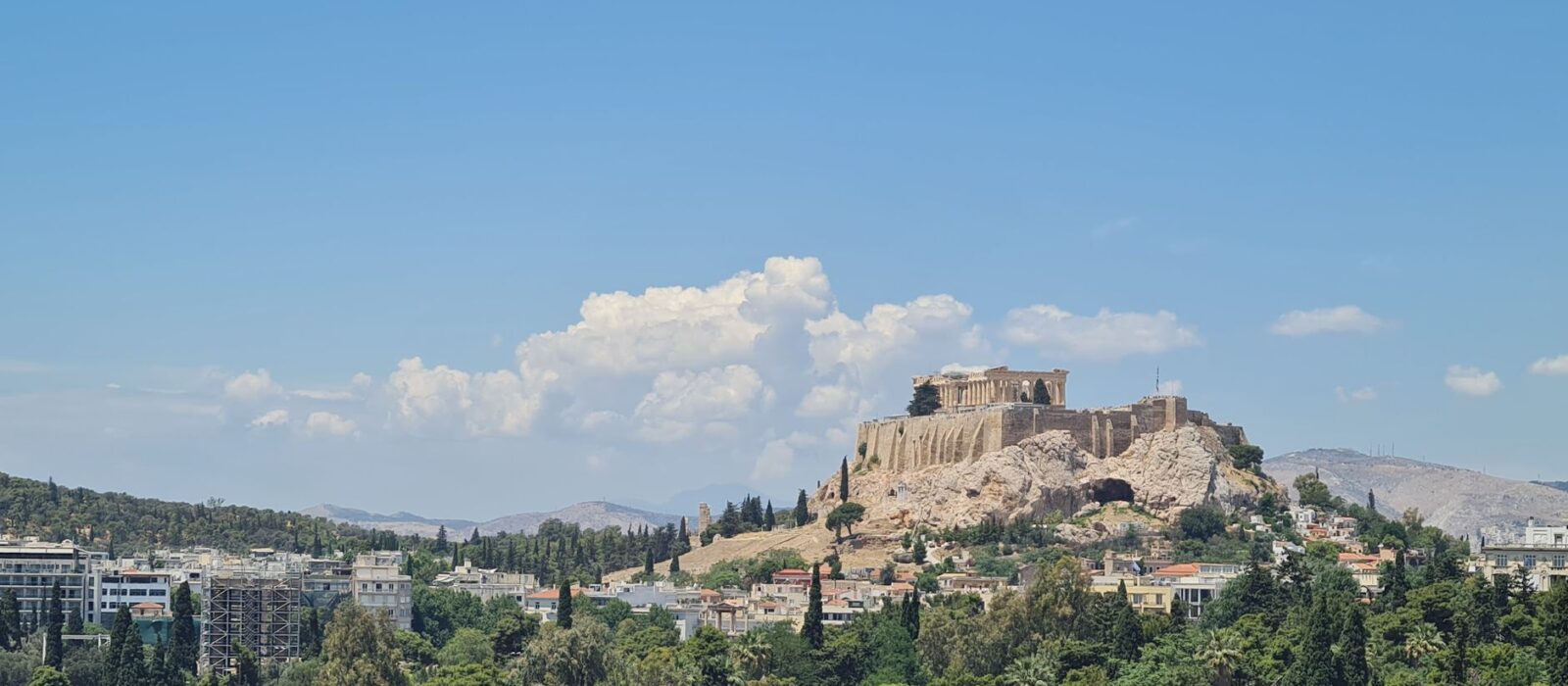
August in Athens: The Honest Summary
Athens in August is an experience of extremes. The focus keyword athens in august gets searched by millions of travellers each year, and the honest answer is: it’s not for everyone. Daytime temperatures regularly breach 38–40°C, the Acropolis bakes in full sun, and much of the city’s local population has fled to the islands. That said, Athens in August has a strange appeal — a quieter, slower city where the remaining residents move deliberately, kafeneions empty by noon, and the light on the Parthenon at dusk is genuinely extraordinary. If you can structure your days around the heat — mornings at sites, long afternoons indoors, evenings stretching past midnight — the city rewards the heat-tolerant traveller. If you need comfortable sightseeing from 10am to 5pm, reconsider. Book early regardless: despite the heat, international tourist numbers remain at or near annual peak in August 2026.
What's open: Sites & tourist restaurants fully open; local shops may close
Weather You Can Actually Expect
August is Athens’ hottest and driest month. Expect daytime highs of 36–40°C, occasionally spiking above that during heatwave events, which have become more frequent across southern Europe. Nights cool only to around 24–26°C, rarely offering real relief. Rainfall is essentially nonexistent — perhaps one or two brief thunderstorms across the entire month, usually in the final week. The sea around Attica reaches 26–28°C, warm enough to feel like a bath rather than a swim.
The Meltemi wind is the critical variable. This strong, dry northerly wind dominates the Aegean through July and August, arriving without reliable warning. In Athens it manifests as a persistent hot breeze that can drop temperatures slightly but mostly just moves the heat around. On exposed coastal spots and the islands nearby, it can be strong enough to make sunbathing miserable and to cancel or delay ferry services with little notice. Don’t book same-day ferries to Aegina or Hydra without a contingency plan.
Crowds and Prices
August is Athens’ peak tourist month by visitor numbers, though paradoxically it can feel less crowded than June or early July in some neighbourhoods — because Athenians themselves leave. Monastiraki and the Plaka are still heaving with international visitors; queues for the Acropolis site open with people who’ve been waiting since before the 8am opening. Pre-book timed entry tickets — walk-up availability is functionally zero by 9am.
Get the Free Athens Locals' Guide
The 50 things actually worth your time in Athens — tavernas locals keep to themselves, quiet viewpoints, and how to skip the Acropolis queues.
Hotel prices are at annual peak. A decent three-star in Koukaki or Psyrri runs €120–180 per night; boutique options in Thissio climb well above €250. Flights into Athens International from most European hubs reflect peak summer surcharges. If you’re booking in 2026, aim to secure accommodation by March at the latest. Restaurant prices in tourist-facing areas are also elevated, but venture even ten minutes into Pangrati or Kypseli and you’ll find neighbourhood tavernas where the locals who stayed are eating at honest prices.
What’s Open and What’s Closed
This is where August in Athens gets complicated. The city does not shut down the way a Greek island village might, but it hollows out in specific ways.
- Major archaeological sites: The Acropolis, the Ancient Agora, the National Archaeological Museum, and the Acropolis Museum are all open and operating full summer hours (typically 8am–8pm). These will be busy.
- Neighbourhood shops and services: Many small independent shops in residential areas — dry cleaners, cobblers, local grocers — close for two to three weeks in August. This is old-fashioned Greek summer rhythm and still persists in 2026 outside tourist corridors.
- Restaurants: Tourist-facing restaurants in Plaka and Monastiraki operate fully. Local favourites in Exarcheia and Kypseli may close for the first two weeks of August; check ahead or look for a handwritten sign on the door.
- Ferries: Piraeus runs frequent services to the Saronic Islands (Aegina, Poros, Hydra, Spetses) and to the Cyclades. Services are plentiful but Meltemi conditions can cause cancellations on exposed routes — particularly to Mykonos and Santorini — sometimes with 24–48 hours’ notice.
- Athens Metro: Runs reliably including to Piraeus Port and the airport. Air-conditioned and genuinely the best way to move around.
What to Do This Month
Rethink the schedule entirely. The Acropolis is best attempted at 8am sharp — the site opens at 8, the light is golden, and the temperature is a survivable 28°C rather than 38°C by mid-morning. The same logic applies to the Ancient Agora, where shade is scarce.
Afternoons belong to the Acropolis Museum (heavily air-conditioned, genuinely world-class, and open until 10pm on Fridays) and the National Archaeological Museum in Exarcheia. Both offer hours of escape from the heat without sacrificing cultural substance.
For evenings, the Athens Epidaurus Festival runs through August 2026, staging performances at the ancient Odeon of Herodes Atticus beneath the Acropolis — one of the genuinely memorable ways to experience the city. Tickets sell fast; browse options on GetYourGuide or book directly through the festival’s own site.
Day trips to the Saronic Islands are popular for good reason. Aegina is 40 minutes by fast ferry from Piraeus, has decent beaches, and the Temple of Aphaia is far less visited than anything in Athens. Book a guided day trip through Viator if you want a structured itinerary with transport included.
What to Pack
Sun protection is not optional — it’s the whole wardrobe logic. Pack a wide-brimmed hat (baseball caps leave ears and neck burned), SPF 50 or higher, and a small portable fan for queues. Lightweight linen or technical-fabric clothing; cotton is fine for evenings but saturates quickly in midday heat. Sandals with real support for uneven ancient paving — flip-flops on the Acropolis hill are a twisted-ankle risk. A reusable water bottle is essential: Athens has functioning public water fountains, particularly near Syntagma and in the Plaka. The thing people forget: a compact, packable umbrella. Afternoon thunderstorms are rare but violent when they arrive, and there is no shelter on most archaeological sites.
Events and Local Life
The Feast of the Assumption of the Virgin (August 15th) is a major Greek Orthodox religious holiday — the most significant of the summer. Expect some businesses and government offices to close on the 15th itself. Many Athenians who haven’t left yet will travel to family homes or island churches on this date, making the city feel briefly emptier.
The Athens Epidaurus Festival dominates the cultural calendar, running from June through August with its final performances in the last week of August. Concerts, theatre, and dance at the Herodes Atticus — the programme for 2026 typically confirms in February. The Technopolis cultural venue in Gazi also hosts summer events, and neighbourhood street festivals (called panigiri) occur in various Athenian suburbs, particularly around the August 15th holiday period.
Hungry for more? Our sister site FoodTourTrails has an in-depth Athens food guide — souvlaki, mezedes, the markets locals love, and food tours worth booking.
Frequently Asked Questions
Is August a good time to visit Athens in 2026?
How early do I need to book Acropolis tickets for August 2026?
What is the Meltemi wind and will it affect my trip to Athens?
Where do Athenians go in August and can tourists follow?
Are restaurants and shops open in Athens in August?
More Things to Do in Athens
Top-rated experiences with free cancellation and instant confirmation.
Related Articles

Athens in December 2026: What Actually Happens When the Tourists Leave Most people write Athens off in December.…

When the sun finally drops below the horizon and the Acropolis lights up against a darkening sky, Athens…

Athens has one of the most misunderstood food scenes in Europe. Most visitors eat their first meal steps…