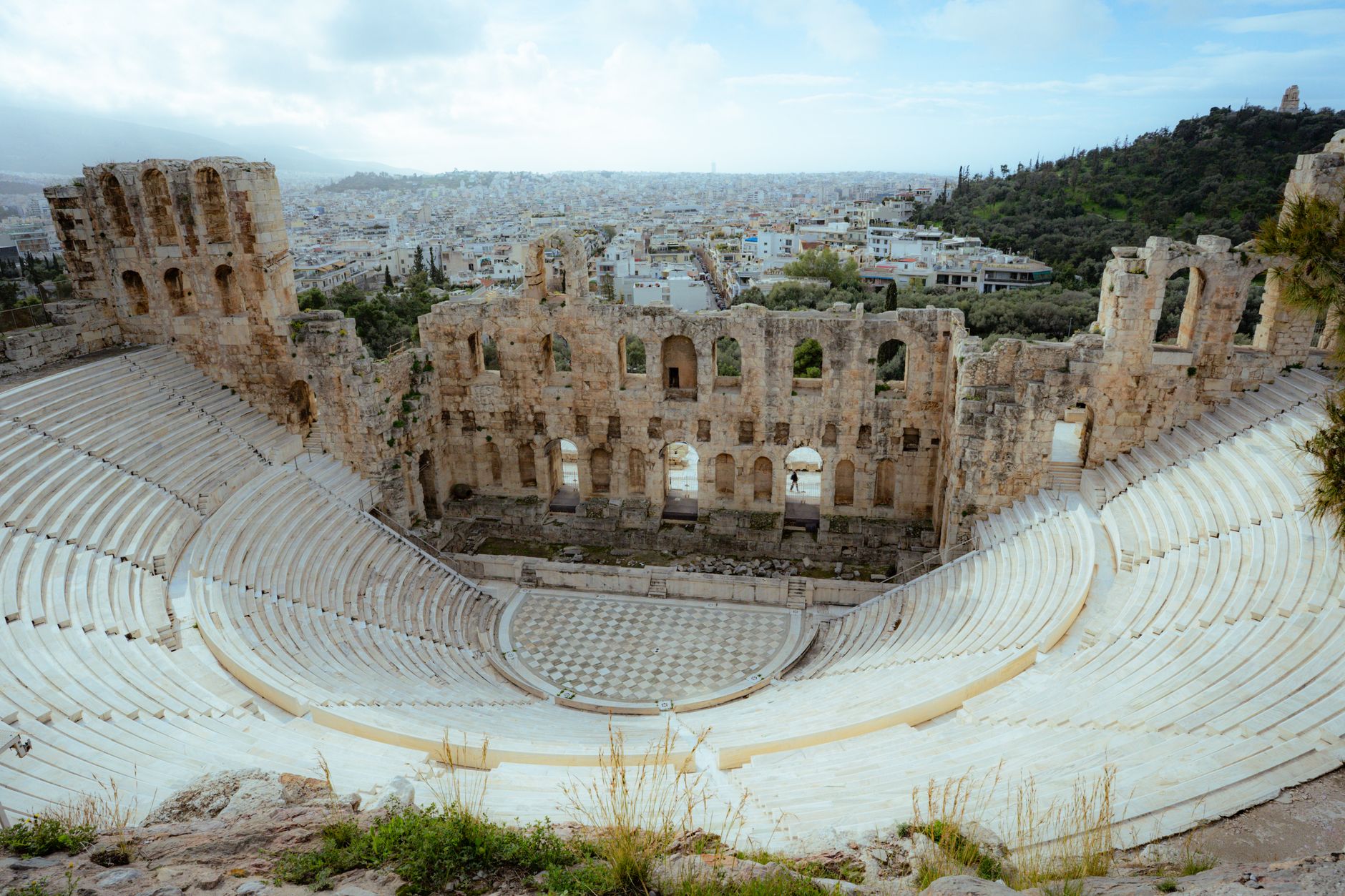
What Exploring Athens Film Locations Is Actually Like
An Athens film locations tour puts you on foot through neighbourhoods that double as backdrops for everything from Hollywood blockbusters to Greek arthouse cinema. This is not a theme park experience — you are walking real streets, past lived-in apartments and busy kafeneions, occasionally stopping to compare a phone screenshot to the building in front of you. It requires some patience and a decent pair of shoes.
Athens has a distinctly unglamorous charm on screen. Directors love its layered architecture — neoclassical facades beside brutalist concrete beside ancient marble — and that quality is even more apparent in person. Unlike Rome or Paris, Athens has not yet built a polished film-tourism infrastructure, which means the locations feel genuinely discovered rather than curated. Some spots are central; others require a metro ride to Piraeus or a bus up to Exarchia.
Who It’s For (and Who Should Skip It)
Film enthusiasts, architecture nerds, and anyone curious about how a city constructs its own mythology on screen will get the most from this kind of self-guided or organised tour. It suits adults and teenagers comfortable walking 5–8 km across uneven terrain — Athens pavements are notoriously broken in places, and several key locations involve cobbled steps or steep inclines around the Acropolis slopes.
If you are after a luxury or passive sightseeing experience, this is probably not your day. You will be doing research in advance, referencing maps, and occasionally feeling slightly foolish standing outside an ordinary building because a famous scene happened there in 2003. People who struggle with heat should plan carefully: mid-July at 38°C is brutal for a walking tour. Anyone with significant mobility limitations should note that Anafiotika, the hillside neighbourhood featured in several Greek films, is entirely inaccessible by wheelchair.
What It Costs
Self-guided tours cost nothing beyond your transport and any entry fees to sites like the Acropolis (€20 for adults in 2025 pricing, likely similar in 2026). The main expense is time and preparation.
Organised film location tours in Athens, bookable through platforms like GetYourGuide or Viator, typically run between €25–€55 per person for a three-to-four-hour walking tour with a guide. Private tours push toward €120–€180 for a couple. Most group tours cap at 10–15 people. Entry fees to specific sites are sometimes included, sometimes not — always check the small print before booking.
Budget an extra €10–€15 for coffee, water, and the inevitable souvlaki stop. Taxis or metro rides to outlying locations like Piraeus add another €5–€12 depending on your starting point. There are no meaningful discounts for students on private tours, though some operators offer reduced group rates.
What’s Included and What to Bring
Typically Included in Organised Tours
- Guided commentary on each filming location and the production behind it
- Printed or digital location map
- Some operators include a short film screening clip at relevant stops
- Headsets for larger groups navigating noisy areas near Monastiraki
What to Bring
- Comfortable walking shoes — not sandals; Plaka cobblestones are unforgiving
- Water (at least 1 litre per person in summer)
- Screenshot references of the films you care most about
- A portable phone charger — GPS and photo-taking drain batteries fast
- Sun protection and a light layer for early-morning starts
- Cash for street food and smaller cafés that do not take cards
The thing most people forget: download offline maps before leaving your accommodation. Phone signal drops in some of the older, narrow passages around Monastiraki and Thisio.
Choosing an Operator
Athens film tourism is still a niche market, which means operator quality varies considerably. A good operator will specify exactly which films and TV productions are covered in their tour — if the listing is vague about titles, treat that as a warning sign.
Look for guides with actual film knowledge rather than general city guides who have added a movie angle as an afterthought. Ask before booking whether the guide can speak to Greek cinema alongside international productions. The city’s role in films like The Two Faces of January (2014) and the works of Yorgos Lanthimos — whose early career is inseparable from Athens locations — deserves more than a passing mention.
Group size matters. Anything over 15 people in narrow Plaka streets becomes logistically awkward. Reputable operators will cap groups and maintain a clear guide-to-guest ratio of roughly 1:10.
Check recent reviews on Viator specifically for mentions of punctuality and location accuracy — some tours have been noted as substituting nearby streets when actual sites are inaccessible. A legitimate operator will tell you upfront if a location is currently under construction or restricted.
Best Time of Day and Year
Early morning starts — before 9:00 — are significantly better for outdoor locations near the Acropolis and Monastiraki. Foot traffic is manageable, light is softer for photography, and the heat is not yet punishing.
April through June and September through October are the most comfortable months overall. July and August work if you begin by 8:00 and plan indoor breaks around midday. Winter (November–February) is genuinely underrated: crowds are minimal, temperatures sit around 12–16°C, and the grey atmospheric light actually suits the grittier, more cinematic Athens neighbourhoods like Metaxourgeio and Omonia, which appear in several Greek noir productions.
Avoid Sunday mornings if your itinerary depends on open shops or cafés near locations — many close until noon. National holidays similarly empty entire neighbourhoods.
Safety and Honest Warnings
Athens is generally safe for tourists, but certain filming locations sit in areas worth approaching with awareness. Omonia Square and parts of Metaxourgeio, featured in Greek crime dramas partly because of their atmospheric roughness, carry a higher rate of petty theft than tourist-heavy Plaka. Keep bags zipped and phones pocketed when referencing maps in these areas.
The heat risk is real and underestimated. Summer tours that run past 11:00 without shade stops are dangerous for anyone not acclimatised — heat exhaustion cases among tourists in Athens spike in July and August each year. If a tour operator does not mention hydration or shade breaks in their summer itinerary, that is a problem.
Uneven pavements cause falls, not dramatic ones, but enough to ruin a trip. This is especially true on the sloped paths around Anafiotika. Ankle-support footwear is a practical recommendation, not an overcautious one. Finally, some external building facades can only be photographed from public streets — do not attempt to enter private residential buildings, even if the interior courtyard appeared on screen.
Is It Worth Booking?
For film enthusiasts, yes — particularly if you pair an organised tour with self-guided follow-up exploring Greek cinema locations independently. The organised tours justify their €30–€55 price point mainly through context: knowing why a director chose a specific staircase in Thisio transforms it from an ordinary street into something worth looking at twice.
Casual tourists who simply enjoy films but have no particular attachment to the productions shot here may find the self-guided approach equally satisfying and considerably cheaper. Athens rewards slow, curious walkers regardless of their film knowledge — the locations are just a useful frame for exploring the city honestly.
🏛 Ready to Book?
Browse verified Athens tours — trusted by over 3.5 million travellers worldwide.
Search Tours on Viator →We earn a small commission at no extra cost to you.
Browse verified Athens experiences — instant confirmation, free cancellation on most tours.
Search Tours on GetYourGuide → We earn a small commission at no extra cost to you.Frequently Asked Questions
More Things to Do in Athens
Beyond food — top-rated experiences with free cancellation & instant confirmation.
Related Articles

New AthensToursHQ Guides — June 2026
Here are the latest guides we published on AthensToursHQ this month. Fresh, hand-written, and…

Athens Street Food Guide: 15 Best Things to Eat in 2026
Updated July 2026: Updated July 2026: Athens in summer means queues at the good…

LGBTQ+ Nightlife in Athens 2026: Best Clubs, Bars & Gay Scene
Updated August 2026: Updated August 2026: Athens is deep into summer mode right now,…