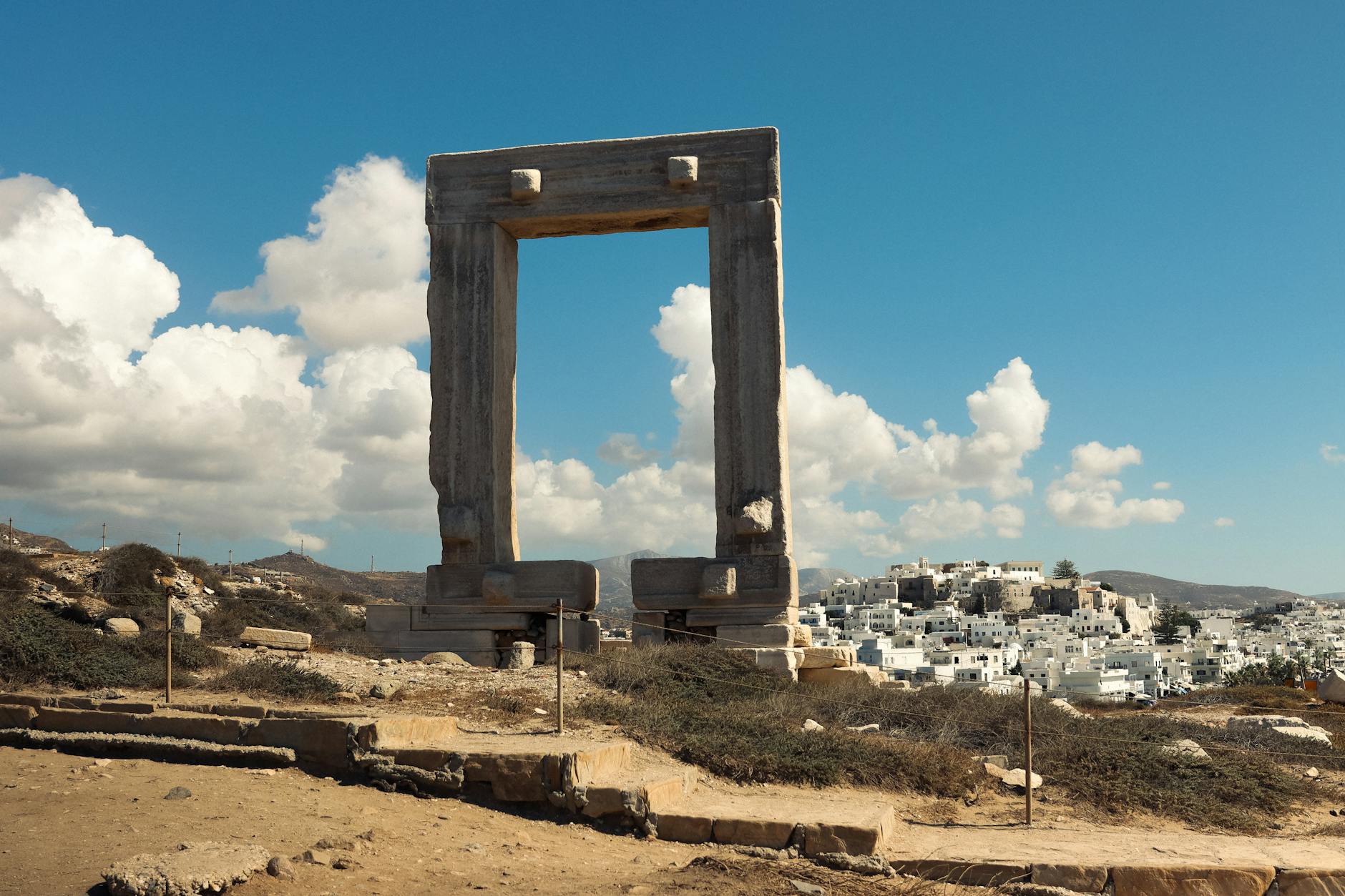
Three thousand years before the Parthenon went up, Mycenae was already running the show. This Bronze Age citadel, perched on a craggy hilltop in the northeastern Peloponnese, was around 1400 BC the most powerful city in the Aegean — home to warrior-kings whose exploits fed Homer enough material for two epics. A day trip from Athens to Mycenae isn’t just a visit to an archaeological site. It’s the earliest chapter of Western civilisation, sitting right there in the open air, surprisingly accessible and completely unlike anything else you’ll see in Greece.
Getting to Mycenae from Athens
Mycenae sits about 120km southwest of Athens. Take the Athens–Corinth motorway, then head south through the flat, sun-bleached Argolid plain — the drive runs 1.5 to 2 hours in reasonable traffic, and the site is well signposted from the village of Mykines, so you won’t get lost. If you’d rather not drive, organised day tours from Athens combine Mycenae with the ancient theatre of Epidaurus and usually throw in Nafplio too, one of the genuinely lovely towns in the whole country. Tours depart around 8–9am and get you back to Athens by 8pm. Long day, but worth every hour of it.
The Lion Gate: First View of Mycenae
Nothing quite prepares you for the Lion Gate. Built around 1250 BC, it’s framed by two enormous upright stones supporting a lintel that weighs roughly 20 tonnes — moved and set in place by Bronze Age builders with no cranes, no mechanised equipment, nothing we’d consider adequate for the job. Above the lintel sits a triangular relief carving: two lions (or lionesses, scholars still debate it) flanking a column. The earliest monumental sculpture in European history, just standing there in the Peloponnesian heat.
Once you’re through the gate, the Cyclopean walls hit differently. Ancient Greeks who visited centuries later, seeing these massive interlocking blocks, couldn’t figure out how any human workforce had built them — so they assumed the mythical giant Cyclopes must have done it. Archaeologists still use that name for this style of construction. It’s a good reminder that even the ancients were sometimes baffled by what came before them.
The Grave Circles and Royal Tombs
Just inside the Lion Gate, Grave Circle A marks where Heinrich Schliemann dug in 1876, convinced he’d uncovered the tombs of Agamemnon and his dynasty. He was off by several centuries — modern archaeology dates these shaft graves to around 1550 BC, well before the Trojan War era — but that doesn’t diminish what he found. Death masks hammered in gold, inlaid swords, jewellery of astonishing refinement. The objects are now in Athens’s National Archaeological Museum, and seeing them after visiting the site puts everything in context. Go to the museum either before or after. Don’t skip it.
The palace complex crowns the summit of the hill — the megaron or throne room, storerooms, workshops, all the machinery of a Bronze Age kingdom that once controlled trade routes across the Aegean. The views from up there, out over the Argolid plain toward the distant Saronic Gulf, are genuinely arresting. Come early if you can. By midday in summer the hilltop is hot, exposed, and packed.
The Treasury of Atreus
Walk about ten minutes back down the access road from the main citadel entrance and you’ll find what is honestly the most impressive structure at the entire site. The Treasury of Atreus — most people call it the Tomb of Agamemnon — is a tholos tomb: a beehive-shaped underground burial chamber reached through a long entrance passage cut straight into the hillside. The corbelled dome inside rises 14 metres and spans 14 metres across. For over a thousand years after it was built around 1250 BC, this was the largest domed space in the world. Standing inside it, in the near-dark, the scale and silence do something to you that’s hard to explain. It’s one of those rare moments where a place earns its reputation.
Combining Mycenae with Nafplio and Epidaurus
Mycenae pairs naturally with two excellent nearby stops. Nafplio is 30 minutes south — a Venetian harbour town with good tavernas, the hulking Palamidi fortress above it, and a small archaeological museum that punches well above its weight with finds from the Argolid. Epidaurus is about 30 minutes east of Mycenae, and the theatre there has acoustics that sound like a myth until you experience them yourself: a coin dropped on the stage is audible in the upper tiers. Its 14,000-seat cavea is among the best-preserved ancient theatres anywhere. A full day hitting all three is long but genuinely rewarding. Book your Mycenae day trip from Athens and step back to the dawn of European history.
🏛 Ready to Book?
Browse verified Athens tours — trusted by over 3.5 million travellers worldwide.
Search Tours on Viator →We earn a small commission at no extra cost to you.
Browse verified Athens experiences — instant confirmation, free cancellation on most tours.
Search Tours on GetYourGuide → We earn a small commission at no extra cost to you.Frequently Asked Questions
More Things to Do in Athens
Beyond food — top-rated experiences with free cancellation & instant confirmation.
Related Articles
Acropolis Museum Athens 2026: Tickets, Tours & What Not to Miss
The Acropolis Museum in 2026: What You Actually Need to Know I’ve been to…
Epidaurus Day Trip from Athens 2026: Ancient Theatre & Sanctuary of Asclepius
Planning an Epidaurus day trip from Athens is one of the best decisions you…
Meteora Day Trip from Athens 2026: Monasteries in the Sky
Updated September 2026: Updated September 2026: Train schedules between Athens and Kalambaka shifted again…