What a Kaisariani Monastery Day Trip Is Actually Like
A Kaisariani Monastery day trip from Athens delivers something the Acropolis crowds cannot — genuine quiet, Byzantine frescoes you can study at arm’s length, and a forest trail that smells of pine and thyme rather than sunscreen. The monastery sits roughly 5km east of central Athens on the western slope of Mount Hymettus, tucked into a wooded ravine fed by a small spring that locals have considered sacred since antiquity. Getting here by bus (line 224 from Ethniki Amyna metro station, roughly 20 minutes) costs under €2 each way, which immediately sets the tone: this is not a polished tourist circuit.
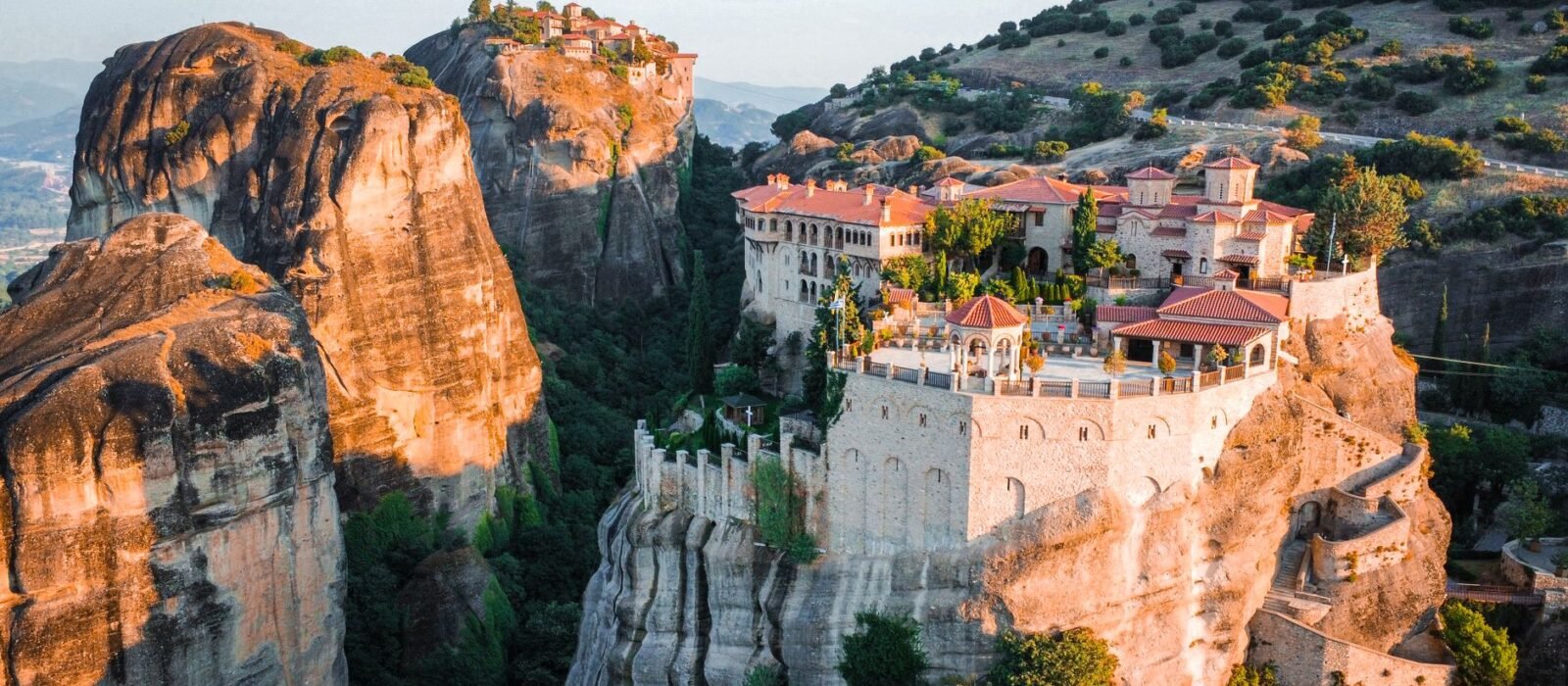
Unlike the monasteries of Meteora, which require climbing steps and navigating tour-group bottlenecks, Kaisariani absorbs visitors easily. The main church, an 11th-century cross-in-square structure with 17th-century frescoes painted by Ioannis Hypatios, takes about 45 minutes to explore properly. Pair that with the bathhouse, the olive press building, and a walk along one of the marked Hymettus trails, and you have a full half-day without ever feeling rushed.
Who It’s For (and Who Should Skip It)
This day trip suits anyone who wants history without the Acropolis fatigue — history enthusiasts, hikers comfortable on uneven terrain, and families with children aged 8 and up. The monastery grounds themselves are largely flat and accessible, though the old stone floors inside the church are uneven enough to warrant decent shoes.
The forest trails on Hymettus range from a gentle 2km loop near the monastery to steeper paths climbing toward the summit ridge. The gentler routes are fine for most fitness levels. The upper trails involve significant elevation gain and loose gravel; anyone with knee problems or low stamina should stick to the lower paths.
Get the Free Athens Locals' Guide
The 50 things actually worth your time in Athens — tavernas locals keep to themselves, quiet viewpoints, and how to skip the Acropolis queues.
Solo travellers and couples on a slower Athens itinerary tend to love this place. It is not right for people looking for nightlife adjacency, air-conditioned museum experiences, or a heavily guided narrative — the site has minimal on-site interpretation in English, so arriving without background research means missing much of the context. Those who find value only in bucket-list landmarks will likely feel underwhelmed.
What It Costs
Entry to Kaisariani Monastery in 2026 is €6 per adult, reduced to €3 for EU students and free for visitors under 18. The site is managed by the Greek Ministry of Culture, and prices have been stable for several years, though a small seasonal adjustment is possible — confirm on the official ministry website before visiting.
Getting there independently costs under €4 round-trip by public bus. A taxi from Syntagma runs approximately €12–15 one way depending on traffic.
Guided tours that include Kaisariani as a standalone or combined with other Hymettus sites are listed on platforms like GetYourGuide and typically run €30–55 per person, including transport and a licensed guide. These are worth considering if you want detailed art-historical commentary on the frescoes, which are genuinely complex in their iconographic programme. Note that lunch, personal snacks, and any hiking gear are always extra regardless of which tour format you choose.
What’s Included and What to Bring
Pros
- Exceptional Byzantine frescoes in a crowd-free setting — far fewer visitors than the Acropolis
- Accessible by public bus for under €2 each way, making it one of the best-value sites near Athens
- Forest trails on Hymettus add genuine outdoor depth to what could be a purely cultural visit
- Small site scale means you can absorb everything properly in a half-day without fatigue
Cons
- Minimal English-language interpretation on-site — arriving unprepared means missing most of the art-historical context
- Upper Hymettus trails are not suitable for anyone with knee problems or low stamina, and can be dangerously hot in July and August
- Forest closures during summer fire-risk periods can disrupt hiking plans with little advance notice
- Closed Mondays and closes as early as 3pm in winter — easy to arrive and find the gate shut
What Is Typically Included
- Site entry (if booked through a guided tour)
- Return transport from central Athens (guided tours only)
- Licensed guide for monastery and grounds
- Basic trail map (some operators, not all)
What to Bring
- Closed-toe shoes with grip — the church floors and forest paths both demand it
- Water — at least one litre per person; the spring water at the site is not reliably potable
- A light layer — the forest is significantly cooler than central Athens, especially in spring and autumn mornings
- Sun protection for the open sections of the Hymettus trails
- Cash — the ticket booth does not always accept cards
- A torch or phone light if you want to examine the lower register frescoes inside the narthex clearly
The thing most visitors forget: the monastery enforces a dress code. Shoulders and knees must be covered. Wraps are sometimes available at the entrance but are not guaranteed — bring your own.
Choosing an Operator
Most visitors do Kaisariani independently, and the site rewards that approach if you prepare. But a guided visit genuinely adds depth here because the frescoes require contextual knowledge — knowing that the Pantocrator in the dome was repainted in the 1680s, or that the narthex cycle follows a specific liturgical sequence, transforms the experience from decorative to meaningful.
If booking through Viator or GetYourGuide, filter for tours led by licensed Greek guides (look for EOT or GNTO certification mentioned explicitly) rather than general city-tour operators who add Kaisariani as an afterthought. Group sizes above 15 make the small church interior uncomfortably crowded — ask the operator directly before booking.
The best operators combine the monastery with a structured Hymettus forest walk, offering at least 90 minutes of trail time in addition to the site visit. Avoid packages that claim to cover Kaisariani, the National Garden, and Cape Sounion in a single day — the monastery deserves more than a 30-minute stop.
Check cancellation policies carefully. Athens weather in January and February occasionally brings enough rain to make the upper trails slippery and unpleasant, and a flexible refund policy matters.
Best Time of Day and Year
April through early June is the strongest window. The Hymettus forest is green, wildflowers line the lower trails, and temperatures stay comfortable for walking — typically 18–24°C. The light on the monastery’s warm stone facade is particularly good in morning hours before 11am.
July and August work, but expect heat above 35°C on the exposed upper trails. Arrive before 9am, walk early, and retreat before noon. The monastery itself stays cool inside the stone walls regardless of season.
Autumn (September–October) is underrated. The crowds that do exist thin out, the air is clear, and Hymettus takes on a drier, more aromatic quality as the herbs dry out. Winter visits are quiet and atmospheric but several trail sections can be muddy or closed after heavy rain.
Kaisariani is closed on Mondays. Opening hours in summer run 8am–8pm; in winter, closing time moves to 3pm. Arrive well before closing — the site staff begin clearing visitors 30 minutes early.
Safety and Honest Warnings
The Hymettus trails are not technical, but they are real trails on a real mountain. Getting lost is a genuine risk on the upper paths — marked routes fade, unofficial paths branch off, and mobile signal is unreliable above the treeline. Download an offline map (Maps.me or Gaia GPS) before leaving Athens and share your route with someone.
Summer fire risk on Hymettus is serious. The Greek fire service occasionally closes forest areas during extreme heat events, sometimes with little advance notice. Check the Civil Protection authority’s website (civilprotection.gov.gr) on the morning of your visit during June–September.
Inside the monastery church, the floor stones are worn smooth and can be slippery in wet weather. Watch your footing in the narthex particularly. Photography without flash is permitted in most areas, but the narthex frescoes are fragile — do not use flash regardless of what other visitors do.
There is no medical facility near the trailheads. Carry a basic first-aid kit and know that emergency services (dial 112) may take 20–30 minutes to reach upper trail areas.
Is It Worth Booking?
At €6 for independent entry, Kaisariani is one of the best-value cultural sites in the Athens region, full stop. The frescoes alone justify the trip for anyone with even passing interest in Byzantine art, and the forest setting adds a dimension most Athens itineraries miss entirely.
A guided tour at €30–55 represents fair value if the guide is genuinely qualified — it converts a pleasant walk into an art history seminar. Skip the cheaper mass-market packages that treat this as a checkbox.
Kaisariani suits a second or third day in Athens, once the main ancient sites are done. It is not a compromise destination. It is a different register entirely — slower, less famous, and considerably more peaceful.
Frequently Asked Questions
How do I get to Kaisariani Monastery from central Athens?
Is Kaisariani Monastery suitable for children?
What is the dress code at Kaisariani Monastery?
Can I combine Kaisariani with other Athens sights in one day?
Are the Hymettus hiking trails clearly marked?
More Things to Do in Athens
Top-rated experiences with free cancellation and instant confirmation.
Related Articles
A Day Trip Worth Taking Planning a Marathon day trip from Athens in 2026 might be one of…
What the Mani Peninsula Is Actually Like A Mani Peninsula weekend trip from Athens delivers something genuinely different…

The Short Answer A Vouliagmeni Lake day trip is one of the most rewarding half-days you can spend…